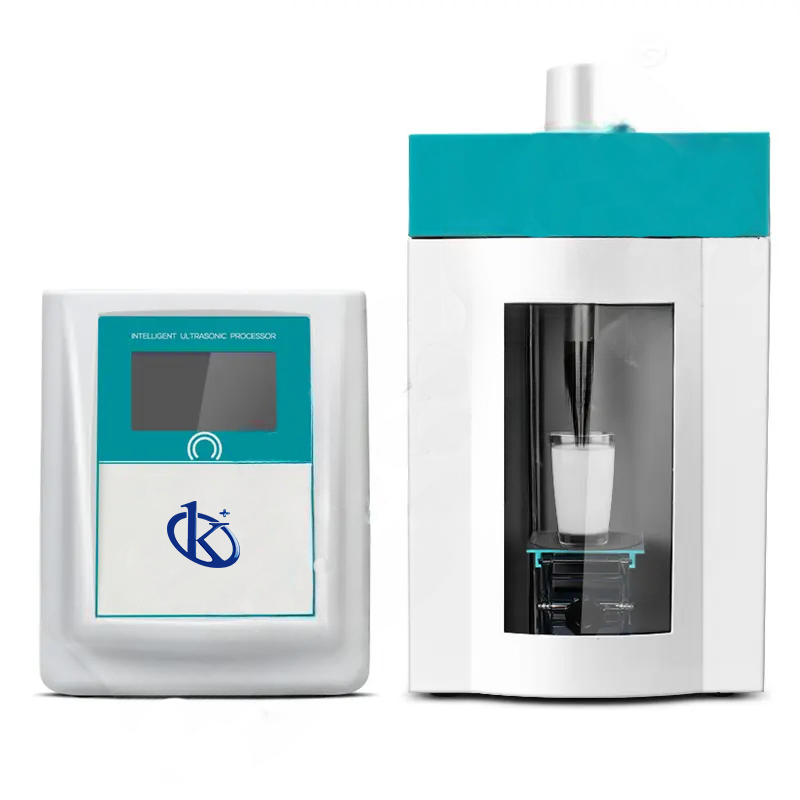
How to Ensure Biosafety and Safe Handling in Ultrasonic Homogenizers?
Ultrasonic homogenizers play a vital role in laboratories, facilitating the dispersion and emulsification of liquids at the microscopic level. However, the safe handling of these devices is paramount to ensure operator safety and compliance with biosafety regulations. This article delves into the critical biosafety protocols and handling practices associated with ultrasonic homogenizers, focusing on various model specifications and their implications for safety.
Understanding Biosafety Protocols in Laboratory Settings
Biosafety protocols are essential measures intended to protect laboratory personnel and the environment from exposure to hazardous biological agents. In the context of ultrasonic homogenizers, these protocols ensure that operators do not come into contact with potentially infectious materials or hazardous chemicals. The Centers for Disease Control and Prevention (CDC) and the National Institutes of Health (NIH) provide guidelines that classify biosafety levels (BSLs) and the practices required at each level.
Key Safety Practices for Ultrasonic Homogenizers
When operating ultrasonic homogenizers, laboratory professionals should adhere to the following safety practices:
- Personal Protective Equipment (PPE): Always wear gloves, goggles, and lab coats to minimize exposure to hazardous materials.
- Aerosol Containment: Use appropriate containment devices to prevent aerosols from escaping into the environment during operation.
- Decontamination Protocols: Regularly decontaminate the work area and equipment to eliminate any hazardous residues.
- Risk Assessment: Conduct a thorough risk assessment before commencing work, identifying potential hazards associated with the samples being processed.
Specific Models and Their Safety Features
Various models of ultrasonic homogenizers offer unique safety features aimed at minimizing risks during operation:
- Ultrasonic Homogenizer YR05015: This model features a protective overload function and an automatic alarm system for overtemperature and operational errors. It is ideal for applications requiring precise control and minimal risk.
- Ultrasonic Homogenizer YR05016: Similar to YR05015, this model includes a PID control system for efficient operation and safety. Its automatic temperature detection enhances operator protection.
- Ultrasonic Homogenizer YR05017: Equipped with voice alarms for failures, this model ensures immediate operator awareness of any safety issues.
- Ultrasonic Homogenizer YR05018: This version extends beyond basic safety features, providing enhanced control over ultrasound time and power settings.
- Ultrasonic Homogenizer YR05019: A robust model with a high power range, it includes an effective overload protection system for safe operation.
- Ultrasonic Homogenizer YR05020: This model offers advanced safety tracking, making it suitable for high-risk biosafety level applications.
Comparison of Available Models
| Model | Power (Continuous) | Mixing Capacity | Features | Best for |
|---|---|---|---|---|
| YR05015 | 1.5 – 150W | 0.1 – 150 ml | PID Control, Overload Protection | General Laboratory Use |
| YR05016 | 2-5 – 250 W | 0.1 – 300 ml | Automatic Alarms, PID Control | Medium Volume Operations |
| YR05017 | 10 – 650 W | 0.1 – 500 ml | Voice Alarms, Temperature Tracking | High-Precision Applications |
| YR05018 | 10 – 900 W | 0.1 – 600 ml | Enhanced Control Features | Complex Emulsions |
| YR05019 | 20 – 1,200 W | 1 – 1,000 ml | Robust Protection Systems | High Throughput Labs |
| YR05020 | 50 – 1,800 W | 1 – 1,200 ml | Advanced Tracking and Alerts | High-Risk Biosafety Levels |
Common Mistakes and How to Avoid Them
Laboratory professionals often encounter several pitfalls when using ultrasonic homogenizers. Here are some common mistakes and strategies to avoid them:
- Neglecting PPE: Always ensure proper use of PPE. This includes gloves, goggles, and lab coats, especially when working with hazardous materials.
- Ignoring Calibration: Regularly calibrate your ultrasonic homogenizer to ensure accurate results and operator safety. Model YR05017, for example, provides a calibration protocol that should be followed rigorously.
- Insufficient Training: Ensure that all personnel are adequately trained in the safe operation of the ultrasonic homogenizer. Comprehensive training reduces the risk of accidents.
- Overloading Equipment: Follow the specified mixing capacities of each model to prevent malfunctions and ensure optimal performance.
Frequently Asked Questions
How can I ensure biosafety when using ultrasonic homogenizers in my lab?
Implementing strict adherence to biosafety protocols is crucial. Using models like YR05020 with advanced safety features can enhance operator protection. Regular training and the use of appropriate PPE are also essential to maintain a safe laboratory environment.
What are the best practices for handling ultrasonic homogenizers safely?
Best practices include wearing PPE, using aerosol containment devices, and establishing decontamination protocols. Models such as YR05019 further support safety with their robust protection features, ensuring efficient and secure operation.
Which ultrasonic homogenizer model is suitable for high-risk biosafety level applications?
The YR05020 is designed for high-risk biosafety level applications, offering advanced safety tracking and high power output. This makes it ideal for laboratories handling hazardous samples while adhering to strict biosafety protocols.
How often should I calibrate my ultrasonic homogenizer for accurate results?
Calibration frequency depends on the usage and model specifications. For instance, the YR05017 is equipped with features that facilitate regular calibration checks, ensuring consistent performance and safety.
What role does personal protective equipment play in ultrasonic homogenizer operation?
PPE significantly reduces the risk of exposure to aerosols and hazardous materials during the operation of ultrasonic homogenizers. Wearing gloves and goggles while using models like YR05016 ensures maximum safety for operators.
How does ultrasonic homogenizer power affect biosafety measures?
The power of an ultrasonic homogenizer, such as the YR05018's 10 – 900 W range, influences the dispersion effectiveness and potential aerosol generation. Higher power levels may require more stringent biosafety measures to mitigate associated risks.
What should I include in my risk assessment for using ultrasonic homogenizers?
A comprehensive risk assessment should address potential hazards associated with the samples and the specific homogenizer model being used, such as the YR05015's features that mitigate risks through overload protection and alarms.
How can I improve safety during high-throughput operations with ultrasonic homogenizers?
Implementing strict operational protocols is vital during high-throughput operations. Models like YR05019, with their high power and safety features, can facilitate efficient processing while minimizing risks.
If you are looking for a fusion of innovation and quality, you have come to the right place. At Kalstein, we offer you the luxury of exploring our exclusive catalog of laboratory equipment. We manufacture every device to the highest standards of excellence. Our intuitive and seamless online purchasing channels are designed for your convenience, securing the most competitive prices. Hesitate no longer — we bring science to life, it is time to become part of our community.