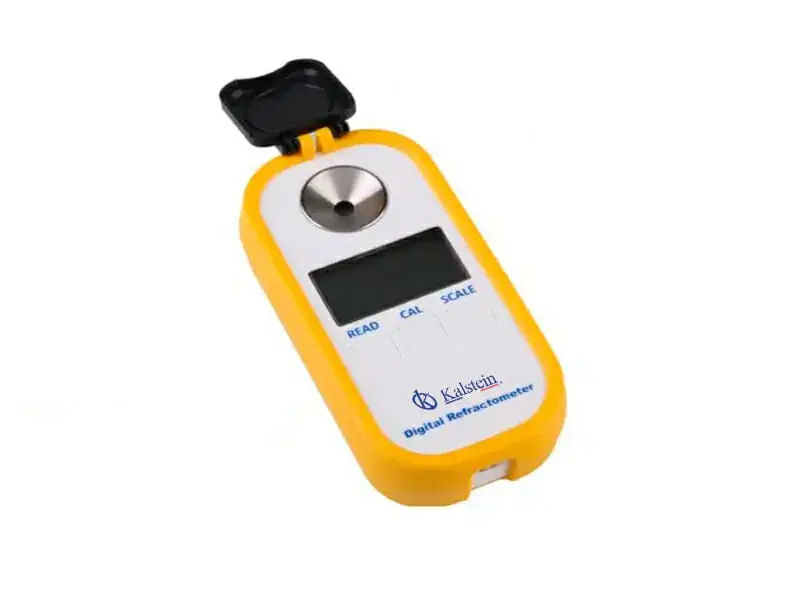
Comparative Analysis of Digital Salinity Refractometers: Choosing the Right Model for Your Lab
The increasing demand for precise measurements in laboratories has led to a rise in the use of Digital Salinity Refractometers across various fields. These instruments are essential for measuring the salinity of solutions, including seawater and saltwater mixtures, making them vital for aquatic research, food and beverage industries, and environmental monitoring. This article will delve into a comparative analysis of different models available in the market, focusing on their specifications, advantages, and overall performance.
Understanding Digital Salinity Refractometers
Digital Salinity Refractometers are specialized tools designed to provide accurate measurements of salinity, typically in percentage or parts per thousand (‰). They operate based on the principle of light refraction, where the refractive index of a solution is measured. This data is critical in numerous applications, such as marine biology, aquaculture, and chemical analysis. The key factors to consider when selecting a refractometer include measurement range, precision, and temperature compensation features.
Comparison of Available Models
| Model Code | Measurement Range | Min. Division | Precision | ATC Capability | Best For |
|---|---|---|---|---|---|
| YR05953 | 0.0 - 28.0% | 0.10% | ±0.1% | Yes | Seawater Analysis |
| YR05954 | 0 - 280‰ | 1‰ | ±1‰ | Yes | Aquaculture Applications |
| YR05955 | 1.000 - 1.217 | 0.001 | ±0.002 | Yes | Density Measurement |
| YR05956 | 1.3330 - 1.3900 nD | 0.0001 nD | ±0.0003 nD | Yes | Refractive Index Measurement |
| YR05957 | 0 - 100‰ | 1‰ | ±2‰ | Yes | Brine Solutions |
| YR05958 | 0 - 57‰ | 1‰ | ±2‰ | Yes | Sugar Solutions |
| YR05959 | 1.000 - 1.070 | 0.001 | ±0.002 | Yes | Low-density Solutions |
| YR05960 | 1.3330 - 1.3530 nD | 0.0001 nD | ±0.0003 nD | Yes | Precise Refractive Measurements |
Comparative Advantages of Different Models
Each model of Digital Salinity Refractometer offers unique features tailored to specific applications. For example, the YR05953 model is particularly suited for seawater analysis due to its wide measurement range of 0.0 to 28.0%. Its precision of ±0.1% makes it an excellent choice for researchers needing accurate readings.
On the other hand, the YR05954 model, with a range of 0 to 280‰, is well-suited for aquaculture environments where varied salinity levels are expected. Its ±1‰ precision is adequate for monitoring aquatic habitats.
For general density measurements, the YR05955 provides a detailed range of 1.000 to 1.217, perfect for substances with low density. Its high precision level of ±0.002 ensures reliable results in laboratory settings.
Common Mistakes and How to Avoid Them
Laboratory professionals often encounter common pitfalls when purchasing and utilizing Digital Salinity Refractometers. An initial mistake is assuming that all models cover the same measurement range. Each model has specific capabilities; for instance, the YR05957 only measures up to 100‰, which may not suffice for certain high-salinity applications.
Another frequent error is neglecting the importance of Automatic Temperature Compensation (ATC). Many models, such as the YR05954, feature ATC, which corrects readings based on temperature variations, ensuring more accurate results in fluctuating environments.
Key Applications Across Different Industries
Digital Salinity Refractometers are utilized in various industries, including marine research, food and beverage production, and environmental monitoring. In marine biology, precise salinity measurements are essential for studying aquatic ecosystems. For example, the YR05953 can be employed to monitor salinity levels in ocean studies.
In the food industry, refractometers like the YR05958 allow manufacturers to control the sugar concentration in products, ensuring consistent quality and flavor. Additionally, environmental monitoring agencies use these devices to measure salinity in bodies of water to track pollution levels.
Frequently Asked Questions
How do I choose the best Digital Salinity Refractometer for marine studies?
To choose the best Digital Salinity Refractometer for marine studies, consider models like the YR05953, which has a measurement range of 0.0 - 28.0% and high precision. This model's ATC feature also ensures accurate readings in varying temperatures, making it ideal for oceanographic research.
What is the importance of Automatic Temperature Compensation in refractometers?
Automatic Temperature Compensation (ATC) is crucial as it adjusts readings based on sample temperature, enhancing accuracy. Models like YR05954 integrate ATC to ensure that measurements remain precise, even in fluctuating aquatic environments.
Can Digital Salinity Refractometers measure other properties besides salinity?
Yes, some models like the YR05955 are designed to measure density, while others, such as YR05956, can measure the refractive index. This versatility makes them suitable for various laboratory applications beyond salinity alone.
What factors should I consider when purchasing a Digital Salinity Refractometer?
When purchasing a Digital Salinity Refractometer, consider measurement range, precision, ease of use, and features like ATC. Models such as YR05957 offer specific advantages for certain applications and should match your laboratory needs.
How often should I calibrate my Digital Salinity Refractometer?
Calibration frequency depends on usage, but it is generally recommended to calibrate before each use or at least once a week for high-frequency measurements. Following the guidelines provided in the manual of models like YR05958 can help ensure accuracy over time.
What is the typical price range for Digital Salinity Refractometers?
The price for Digital Salinity Refractometers, like the YR05953 at approximately $76, varies based on features and specifications. Expect to invest between $50 to $150 depending on model capabilities and additional functionalities.
Conclusion and Call to Action
In conclusion, selecting the right Digital Salinity Refractometer involves considering specific laboratory requirements, model capabilities, and application demands. By understanding the differences between models like the YR05953 and YR05954, professionals can make informed decisions that enhance their operational efficiency.
If you are looking for a fusion of innovation and quality, you have come to the right place. At Kalstein, we offer you the luxury of exploring our exclusive catalog of laboratory equipment. We manufacture every device to the highest standards of excellence. Our intuitive and seamless online purchasing channels are designed for your convenience, securing the most competitive prices. Hesitate no longer — we bring science to life, it is time to become part of our community.