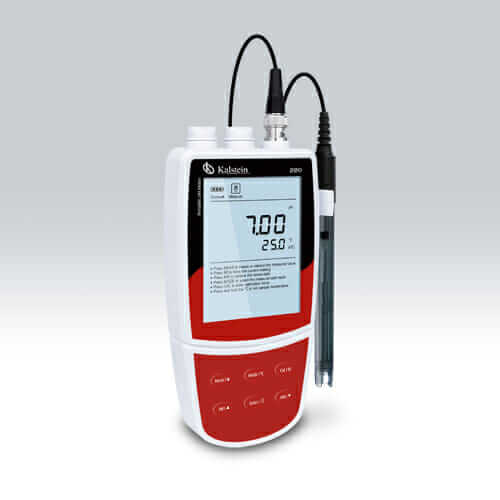
Comparative Analysis of Table pH Meters: Choosing the Right Technology
In the world of laboratory measurement, table pH meters play a crucial role in providing accurate pH assessments. With various models available on the market, laboratory professionals must navigate the options to select the most suitable device. This article will delve into the comparative advantages of different table pH meters, examining their features, applications, and ideal scenarios for usage.
Understanding the Importance of Table pH Meters
Table pH meters are essential in various fields such as chemistry, biology, and environmental science. They enable precise measurements vital for experiments, quality control, and compliance with industry standards. As technology evolves, understanding the capabilities and limitations of each model can optimize laboratory performance.
Key Technologies in Table pH Meters
Several technologies are utilized in table pH meters, including automatic calibration, temperature compensation, and data storage capabilities. These features not only enhance measurement accuracy but also streamline laboratory processes. Let's explore specific model applications to identify their strengths.
Comparison of Available Models
| Model | pH Range | Calibration Points | Resolution | Best For |
|---|---|---|---|---|
| YR0220A | -2.00 to 20.00 pH | 1 to 5 points | 0.01 pH | General laboratory use |
| YR01822 | -2.00 to 20.00 pH | 1 to 3 points | ±0.02 pH | High-resolution measurements |
| YR01825 | -2.00 to 20.00 pH | 1 to 3 points | 0.01/0.001 pH | Advanced research applications |
| YR01823-2 | -2.00 to 20.00 pH | 1 to 5 points | 0.001 pH | Precision laboratory settings |
| YR01823 | -2.00 to 20.00 pH | 1 to 3 points | 0.01/0.1 pH | General and educational use |
| YR01826 | -2.00 to 19.999 pH | 1 to 3 points | 0.1/0.01 pH | Long-distance readings |
Common Mistakes and How to Avoid Them
When utilizing table pH meters, several common mistakes can lead to inaccurate measurements. One frequent error is improper calibration; always ensure to follow the manufacturer's guidelines for calibrating your specific model. Additionally, neglecting to perform routine maintenance can affect performance. For instance, the YR0220A offers automatic diagnostics that can help prevent these issues by notifying users of necessary calibrations.
Advanced Features to Consider
Modern table pH meters come with advanced features that can significantly enhance laboratory efficiency. For example, the YR01822 incorporates Bluetooth capabilities allowing for wireless data transfer. This feature can streamline reporting processes and improve data management, making it a preferred choice for users requiring real-time data access.
Choosing the Right Model for Specific Applications
Identifying the right model for your specific laboratory applications is critical. For instance, if high precision is paramount in your experiments, the YR01823-2, with its ±0.002 pH accuracy, would be a suitable choice. Conversely, for general educational purposes, the more straightforward YR01823 model may suffice.
Long-Term Considerations and ROI
Evaluating the long-term value of your table pH meter is vital. Consider the cost of consumables, calibration frequency, and potential downtime. Models like the YR01825, while initially more expensive, may offer lower operational costs due to their durability and reliable performance, leading to a better return on investment over time.
Frequently Asked Questions
What are the benefits of using a table pH meter with automatic calibration?
Automatic calibration ensures higher accuracy and consistency in measurements. Models like the YR01822 feature this capability, allowing for 1 to 3 point calibration that saves time and reduces user error.
How can I ensure accurate pH measurements with my table pH meter?
Regular calibration is essential for accurate pH measurements. Using the YR0220A, which allows calibration with up to 5 points, can help maintain precision over time.
What is the typical lifespan of a table pH meter in laboratory settings?
The lifespan of a table pH meter can vary, but with proper maintenance, models such as the YR01823 can last several years, maintaining reliable performance throughout their use.
How often should I calibrate my table pH meter?
Calibration frequency depends on usage; however, it's recommended to calibrate daily or before critical measurements, particularly with the YR01826 that supports multiple calibration points for enhanced accuracy.
What features should I look for in a table pH meter for educational use?
For educational purposes, focus on user-friendly models like the YR01823, which offers straightforward operation and sufficient accuracy for teaching experiments.
How does temperature compensation affect pH measurements?
Temperature compensation adjusts readings to account for temperature fluctuations, crucial for accurate pH readings. Models such as the YR01825 provide automatic temperature compensation to enhance measurement reliability.
Which pH meter is best for high-resolution laboratory applications?
The YR01825, equipped with a high-resolution display and advanced features, is ideal for high-resolution applications, ensuring precise and repeatable results.
How can I improve my laboratory's pH measurement accuracy?
To improve accuracy, consider using models like the YR01823-2, which offer better resolution and precision through advanced calibration and diagnostic features.
Request a quote on Kalstein Plus to explore our range of laboratory equipment tailored to your needs.
If you are looking for a fusion of innovation and quality, you have come to the right place. At Kalstein, we offer you the luxury of exploring our exclusive catalog of laboratory equipment. We manufacture every device to the highest standards of excellence. Our intuitive and seamless online purchasing channels are designed for your convenience, securing the most competitive prices. Hesitate no longer — we bring science to life, it is time to become part of our community.