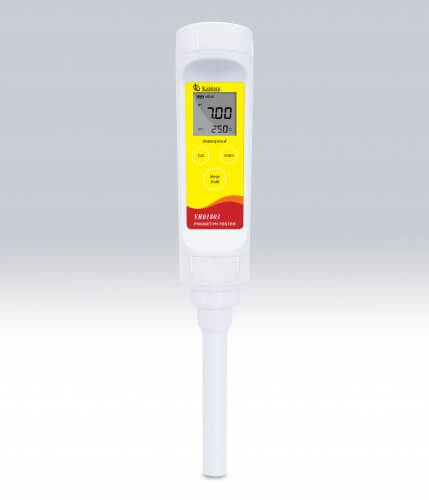
Cost-Benefit Analysis and ROI for Portable pH Meters in Laboratories
In laboratory settings, the purchase of equipment such as portable pH meters requires a thorough understanding of both return on investment (ROI) and the cost-benefit analysis (CBA). These metrics are essential for laboratory professionals to evaluate the financial implications of their investments in portable pH meters, ensuring that their choices support operational efficiency and budgetary constraints.
Understanding Portable pH Meters in the Context of ROI and CBA
Portable pH meters are invaluable tools for laboratory professionals who require precise pH measurements in various environments. The selection of a portable pH meter can significantly impact the laboratory's operational efficiency and overall cost. To make an informed decision, it is crucial to analyze the potential return on investment and conduct a cost-benefit analysis of the available options.
The ROI for laboratory equipment can be assessed by comparing the initial capital expenditure (CAPEX) against the expected benefits over time. When analyzing portable pH meters, factors such as accuracy, ease of use, and the ability to conduct measurements in various conditions must also be considered. The following models will be explored in this article: YR01803, YR01804, YR01800, YR01800-1, YR01802, and YR01802-1.
Comparison of Available Models
| Model | CAPEX (USD) | Cost per Test | Payback (Months) | Recommended Scenario |
|---|---|---|---|---|
| YR01803 | 77.00 | 0.50 | 5 | Field measurements in various samples |
| YR01804 | 75.00 | 0.48 | 4 | Outdoor applications with manual temperature compensation |
| YR01800 | 18.00 | 0.30 | 3 | Quick checks in low-budget labs |
| YR01800-1 | 24.00 | 0.35 | 2.5 | Portable measurements with good durability |
| YR01802 | 94.00 | 0.60 | 6 | High accuracy for semisolid samples |
| YR01802-1 | 72.00 | 0.55 | 5.5 | Versatile for various sample types |
Evaluating the ROI for Portable pH Meters
To evaluate ROI for portable pH meters, consider both the initial costs and ongoing operational expenses. This can include costs related to calibration, maintenance, and the purchase of consumables. Each model's characteristics directly influence the ROI and the overall effectiveness in laboratory scenarios.
For instance, a model like YR01803, priced at $77.00, offers high accuracy and temperature compensation features, which may justify its cost in scenarios that demand precision. Conversely, models like YR01800, with a lower initial cost of $18.00, may appeal to labs with tighter budgets, although this could lead to higher costs in consumables and calibration over time.
Conducting a Cost-Benefit Analysis
Cost-benefit analysis involves comparing the expected benefits of the portable pH meters against their costs. This can include tangible benefits such as improved measurement accuracy, as well as intangible benefits, including user satisfaction and ease of use.
For instance, investing in a high-end model like YR01802 at $94.00 could be beneficial for laboratories specializing in semisolid samples due to its advanced features. By carefully analyzing these aspects, laboratory managers can make more informed decisions regarding which portable pH meter best aligns with their operational needs.
Common Mistakes and How to Avoid Them
Laboratory professionals often make common mistakes when selecting portable pH meters. One of the most prevalent errors is focusing solely on the initial purchase price without considering the total cost of ownership, including maintenance and calibration expenses.
Another mistake is neglecting to evaluate the specific needs of the laboratory environment. For example, choosing a model like YR01804, which is suited for outdoor applications, for an indoor laboratory might result in suboptimal performance. To avoid these mistakes, establish a clear understanding of laboratory requirements and the long-term financial implications of equipment choices.
Maximizing Operational Efficiency with Portable pH Meters
Operational efficiency can be significantly enhanced through the strategic use of portable pH meters. By selecting models that align with the specific needs of the laboratory, professionals can reduce the time spent on testing and enhance the accuracy of their results.
For example, using the YR01800 model for quick checks can streamline processes in a busy laboratory environment, increasing throughput and reducing bottlenecks. Identifying the right portable pH meter for your laboratory can lead to improved productivity and better overall results.
Specific Features to Consider in Portable pH Meters
When evaluating portable pH meters, certain features should be prioritized. Calibration options, accuracy, temperature compensation, and the type of electrode used are critical elements that impact performance and usability.
Models like YR01803 and YR01802, which support multiple calibration points, offer flexibility for various applications. Additionally, features such as automatic temperature compensation ensure accurate readings across different sample types, making these models suitable for diverse laboratory environments.
Frequently Asked Questions
What is the expected ROI from using portable pH meters in laboratories?
The expected ROI from portable pH meters like the YR01803 can vary significantly based on usage frequency and type. Typically, a well-utilized meter may recoup its cost in around 5 months through improved efficiency and reduced errors in sample analysis.
How can I assess the total cost of ownership for portable pH meters?
To assess the total cost of ownership for portable pH meters, consider initial costs, maintenance expenses, calibration fees, and consumable costs. Models like YR01804 may have lower initial costs but could incur higher operational costs in the long run.
Which portable pH meter is best for outdoor applications in 2023?
The YR01804 is particularly well-suited for outdoor applications due to its manual temperature compensation feature, making it easier to achieve accurate readings in varying environmental conditions.
What are the maintenance requirements for portable pH meters?
Maintenance requirements typically include regular calibration, cleaning of electrodes, and proper storage conditions. Models such as YR01802 have replaceable electrodes which can help maintain their accuracy over time.
How accurate are portable pH meters in laboratory settings?
Portable pH meters like the YR01803 offer accuracy levels of ±0.01 pH, ensuring reliable measurements in laboratory settings. Regular calibration is essential to maintain this level of accuracy.
What features should I look for in a portable pH meter?
Look for features such as multi-point calibration, automatic temperature compensation, and electrode versatility. Models like YR01802 excel in these areas, making them ideal for various laboratory applications.
What applications are best suited for portable pH meters?
Portable pH meters are best suited for field measurements, quick checks in labs, and situations requiring high accuracy, such as food analysis. Models like the YR01803 are particularly effective in these scenarios.
How can I enhance the lifespan of my portable pH meter?
Enhancing the lifespan of a portable pH meter involves regular maintenance, such as calibrating the device, properly cleaning the electrode, and storing it correctly. Using models like YR01800 with robust designs can also improve durability.
If you are looking for a fusion of innovation and quality, you have come to the right place. At Kalstein, we offer you the luxury of exploring our exclusive catalog of laboratory equipment. We manufacture every device to the highest standards of excellence. Our intuitive and seamless online purchasing channels are designed for your convenience, securing the most competitive prices. Hesitate no longer — we bring science to life, it is time to become part of our community.