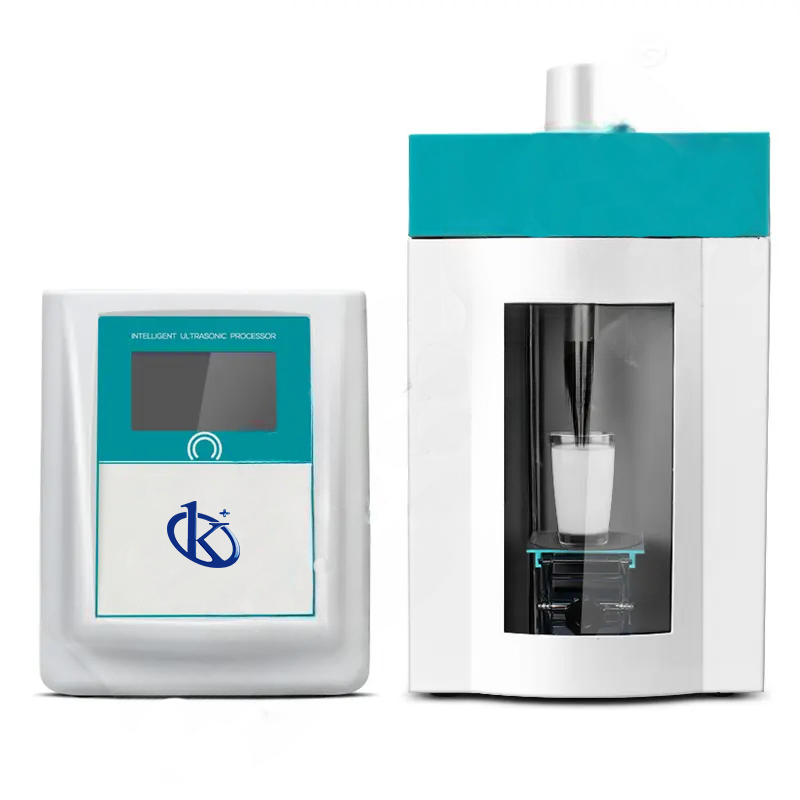
Energy Sustainability and Environmental Footprint Reduction in Ultrasonic Homogenizers
In today’s scientific research and laboratory environments, energy sustainability and environmental footprint reduction are critical considerations for equipment selection. Ultrasonic homogenizers represent a subcategory of laboratory devices that can significantly enhance energy efficiency while minimizing environmental impact. This article explores various models of ultrasonic homogenizers, their specifications, and the ways in which they can contribute to sustainable laboratory practices.
Understanding Energy Sustainability in Ultrasonic Homogenizers
Energy sustainability in ultrasonic homogenizers revolves around the efficient use of power resources. These devices apply ultrasonic waves to mix or homogenize samples, which can dramatically reduce the time and energy required for sample preparation. By choosing models that offer variable power settings, such as the Ultrasonic Homogenizer YR05015 which operates between 1.5 – 150W, laboratories can tailor their energy consumption according to specific needs.
Additionally, many ultrasonic homogenizers are designed with energy-efficient components that minimize electricity usage during operation. This not only benefits the environment but can also lead to substantial cost savings over time.
Reducing Environmental Footprint: The Role of Ultrasonic Homogenizers
Ultrasonic homogenizers can contribute to reducing the environmental footprint of laboratory operations primarily by lowering reagent consumption and waste generation. For instance, the Ultrasonic Homogenizer YR05020, with its capacity ranging from 1 – 1,200 ml, allows for the efficient processing of larger volumes, thus reducing the frequency of batch runs and overall material usage.
Moreover, ultrasonic homogenizers can enhance the efficacy of chemical processes, enabling the use of smaller quantities of reagents without compromising results. This translates to less hazardous waste and a reduced need for disposal strategies, aligning laboratory practices with sustainability goals.
Comparison of Available Models
| Model | Power (Continuous) | Mixing Capacity (ml) | Price (USD) |
|---|---|---|---|
| YR05015 | 1.5 – 150W | 0.1 – 150 ml | 756.00 |
| YR05016 | 2-5 – 250 W | 0.1 – 300 ml | 882.00 |
| YR05017 | 10 – 650 W | 0.1 – 500 ml | 1050.00 |
| YR05018 | 10 – 900 W | 0.1 – 600 ml | 1281.00 |
| YR05019 | 20 – 1,200 W | 1 – 1,000 ml | 1785.00 |
| YR05020 | 50 – 1,800 W | 1 – 1,200 ml | 2058.00 |
Implementing Sustainable Practices in Laboratory Settings
To effectively implement sustainable practices utilizing ultrasonic homogenizers, laboratories should consider several strategies:
- Select the right model: Choose an ultrasonic homogenizer that offers energy-efficient operation suitable for your specific application.
- Monitor energy usage: Regularly assess the energy consumption of your ultrasonic homogenizers and adjust settings to minimize waste.
- Optimize reagent use: Experiment with different concentrations and processing times to find the least amount of reagent necessary for effective results.
- Utilize efficient workflow designs: Streamline procedures to take full advantage of the capabilities of ultrasonic homogenizers, thereby reducing downtime and energy use.
Common Mistakes and How to Avoid Them
In the pursuit of energy sustainability with ultrasonic homogenizers, laboratories may encounter several common pitfalls:
- Overusing energy: Failing to adjust power settings can lead to unnecessary energy consumption. Always calibrate your equipment to the lowest effective power setting.
- Inefficient batch sizes: Running smaller batches more frequently can increase energy usage. Whenever possible, maximize capacity to reduce the overall number of runs.
- Neglecting maintenance: Regular maintenance ensures that equipment operates efficiently. Develop a schedule for routine checks and calibrations.
Frequently Asked Questions
How can ultrasonic homogenizers contribute to energy sustainability in laboratories?
Ultrasonic homogenizers, such as the YR05015, use controlled energy inputs for mixing, allowing labs to minimize energy waste while achieving optimal results in a shorter time frame.
What are the environmental benefits of using ultrasonic homogenizers?
Using ultrasonic homogenizers reduces chemical waste by allowing for more efficient reagent use. For instance, the YR05020 can process larger volumes, thus decreasing the frequency of chemical use and disposal.
Which ultrasonic homogenizer models are most energy-efficient?
Models like the YR05015 and YR05016 offer varying power settings, enabling laboratories to operate them at the most efficient energy levels necessary for specific applications.
How do ultrasonic homogenizers reduce reagent consumption?
Ultrasonic homogenizers can achieve desired results with smaller reagent amounts due to enhanced mixing efficiency. This capability is evident in models like the YR05018, which allows for precise control of mixing processes.
What features should I look for in an energy-efficient ultrasonic homogenizer?
Look for models that offer adjustable power settings, effective mixing capacity, and energy-saving features, such as the YR05019, which can be tailored to specific laboratory needs.
How does the purchase of ultrasonic homogenizers impact lab sustainability goals?
Investing in energy-efficient ultrasonic homogenizers like the YR05020 can help labs meet sustainability targets by reducing energy and reagent usage, thus lowering their overall environmental impact.
What is the cost-benefit analysis of using ultrasonic homogenizers for sustainability?
While the initial investment may vary, models like the YR05017 can lead to long-term savings on energy and reagents, making them a cost-effective choice for sustainable laboratory practices.
How often should ultrasonic homogenizers be maintained for optimal energy efficiency?
Regular maintenance is crucial for energy efficiency; it is recommended to conduct routine inspections and calibrations every six months to ensure models like the YR05016 operate at peak performance.
If you are looking for a fusion of innovation and quality, you have come to the right place. At Kalstein, we offer you the luxury of exploring our exclusive catalog of laboratory equipment. We manufacture every device to the highest standards of excellence. Our intuitive and seamless online purchasing channels are designed for your convenience, securing the most competitive prices. Hesitate no longer — we bring science to life, it is time to become part of our community.