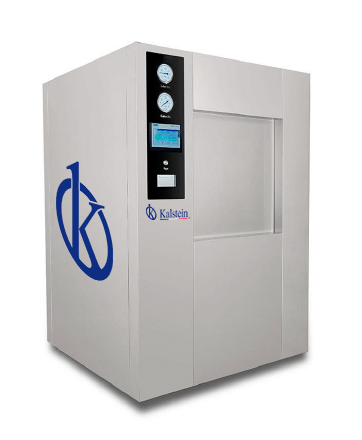
How to Evaluate Investment Returns and Cost-Benefit Analysis for Vertical Autoclaves
In laboratory settings, the choice of autoclaves significantly impacts operational efficiency and financial performance. Understanding the return on investment (ROI) and conducting a meticulous cost-benefit analysis is essential for laboratory managers. This article explores key metrics, compares various vertical autoclave models, and highlights common pitfalls to avoid in your investment journey. Moreover, this comprehensive analysis will empower you to make informed decisions that align with your laboratory's goals.
Understanding ROI and Cost-Benefit Analysis in Laboratories
Return on investment refers to the gain or loss generated relative to the amount invested. In the context of vertical autoclaves, evaluating ROI involves analyzing initial costs, operational expenses, and potential savings. Conducting a cost-benefit analysis allows laboratories to weigh the costs against the expected benefits, helping to determine which models offer the greatest value over time.
Calculating ROI in laboratory equipment typically involves several variables, including acquisition costs, maintenance expenses, labor costs, and the revenue generated from improved efficiency. These calculations can be further refined by distinguishing between capital expenditures (CAPEX) and operational expenditures (OPEX). By understanding these two categories, laboratory managers can better gauge the long-term financial implications of their autoclave investments.
Comparison of Available Models
| Model Code | Price (USD) | Recommended Use | Key Features |
|---|---|---|---|
| YR05653 | 13030.00 | High-volume laboratories | Automatic sliding door, high sterilization efficiency |
| YR05653-1 | 14394.00 | Research institutions | Advanced safety features, user-friendly interface |
| YR05655 | 724.00 | Small labs with limited budgets | Compact design, basic sterilization functions |
| YR05656 | 853.00 | Medium-sized laboratories | PID control, stainless steel construction |
| YR05657 | 1210.00 | General use in various settings | Versatile temperature range, digital display |
| YR05658 | 1448.00 | Institutional use | Enhanced drying features, efficient steam generation |
Investment Scenarios: CAPEX vs OPEX
In evaluating vertical autoclaves, distinguishing between CAPEX and OPEX is crucial. CAPEX includes the purchase price, installation, and initial setup costs; OPEX covers ongoing costs such as maintenance, utilities, and consumables.
For instance, the YR05653 model, priced at $13,030, could lead to lower OPEX due to its high efficiency and reduced operational costs. In contrast, the YR05655 model, while less expensive upfront at $724, may incur higher OPEX due to its limited capabilities and efficiency.
Quantitative Breakdown of Costs Per Test
Understanding the cost per test can bolster the decision-making process regarding the investment in vertical autoclaves. By assessing the total operational costs divided by the number of sterilization cycles, laboratories can estimate their per-test costs.
| Model Code | Total Annual Cost (USD) | Annual Cycles | Cost Per Test (USD) |
|---|---|---|---|
| YR05653 | 15000 | 200 | 75 |
| YR05653-1 | 15500 | 200 | 77.5 |
| YR05655 | 5000 | 100 | 50 |
| YR05656 | 6000 | 100 | 60 |
| YR05657 | 8000 | 100 | 80 |
| YR05658 | 9000 | 100 | 90 |
Evaluating Long-Term Financial Implications
A critical aspect of cost-benefit analysis is understanding the long-term financial implications of investing in autoclaves. By comparing the initial cost against the expected lifespan and maintenance costs of each model, laboratories can forecast total ownership costs.
The YR05653 and YR05653-1 models, while having higher upfront costs, may provide better long-term value due to reliability and lower maintenance needs. Conversely, the YR05655, with lower initial costs, might not justify its expenses in the long run due to frequent maintenance or shorter lifespans.
Common Mistakes and How to Avoid Them
Investing in laboratory equipment can be fraught with pitfalls. Common mistakes include failing to consider total ownership costs, neglecting to evaluate the model's adaptability to future needs, and overlooking potential savings from more efficient models.
To avoid such mistakes, laboratories should conduct thorough research on each model's capabilities, assess long-term needs, and project future growth. This holistic approach ensures that investments align with the laboratory's strategic goals, maximizing ROI.
Frequently Asked Questions
How can I calculate the ROI for a vertical autoclave investment?
Calculating ROI for a vertical autoclave, such as the YR05653, involves assessing initial costs, operational expenses, and potential savings over time. By quantifying these variables, you can determine the financial benefits relative to the investment made.
What are the typical costs involved in operating a vertical autoclave?
The operating costs for a vertical autoclave like the YR05655 may include electricity, maintenance, and consumables. Generally, the total annual cost can be estimated based on these factors and divided by the number of cycles to derive the cost per test.
Which vertical autoclave offers the best cost-effectiveness for a small lab?
For small labs, the YR05655 model at a price of $724 may offer the best cost-effectiveness due to its lower initial investment and efficient functionality, despite some limitations in features compared to higher-end models.
How do I determine the best vertical autoclave model for my laboratory needs?
Determining the best model, such as the YR05653-1, involves assessing your laboratory's size, throughput requirements, and specific sterilization needs. Comparing features, costs, and long-term benefits is essential in making an informed choice.
What features should I look for in a vertical autoclave for research institutions?
Research institutions may benefit from models like the YR05653, which offers advanced safety features and high efficiency. Look for automated systems, reliability, and comprehensive monitoring capabilities for optimal performance.
How can a vertical autoclave improve our laboratory’s sterilization efficiency?
A vertical autoclave like the YR05656 can enhance sterilization efficiency by providing consistent performance, faster cycle times, and reduced energy consumption, all of which contribute to improved laboratory productivity and lower operational costs.
What are the safety features of modern vertical autoclaves?
The YR05653-1 model includes several safety features such as automatic door locks, pressure monitoring, and fail-safe systems. These features ensure safe operation and compliance with laboratory safety standards.
How do I integrate a vertical autoclave into our existing laboratory setup?
Integrating a vertical autoclave involves evaluating your current workflow and ensuring compatibility with existing equipment. Models like the YR05655 are designed for easy installation, making the integration process smoother.
If you are looking for a fusion of innovation and quality, you have come to the right place. At Kalstein, we offer you the luxury of exploring our exclusive catalog of laboratory equipment. We manufacture every device to the highest standards of excellence. Our intuitive and seamless online purchasing channels are designed for your convenience, securing the most competitive prices. Hesitate no longer — we bring science to life, it is time to become part of our community.