Fetal Monitor YR02190A
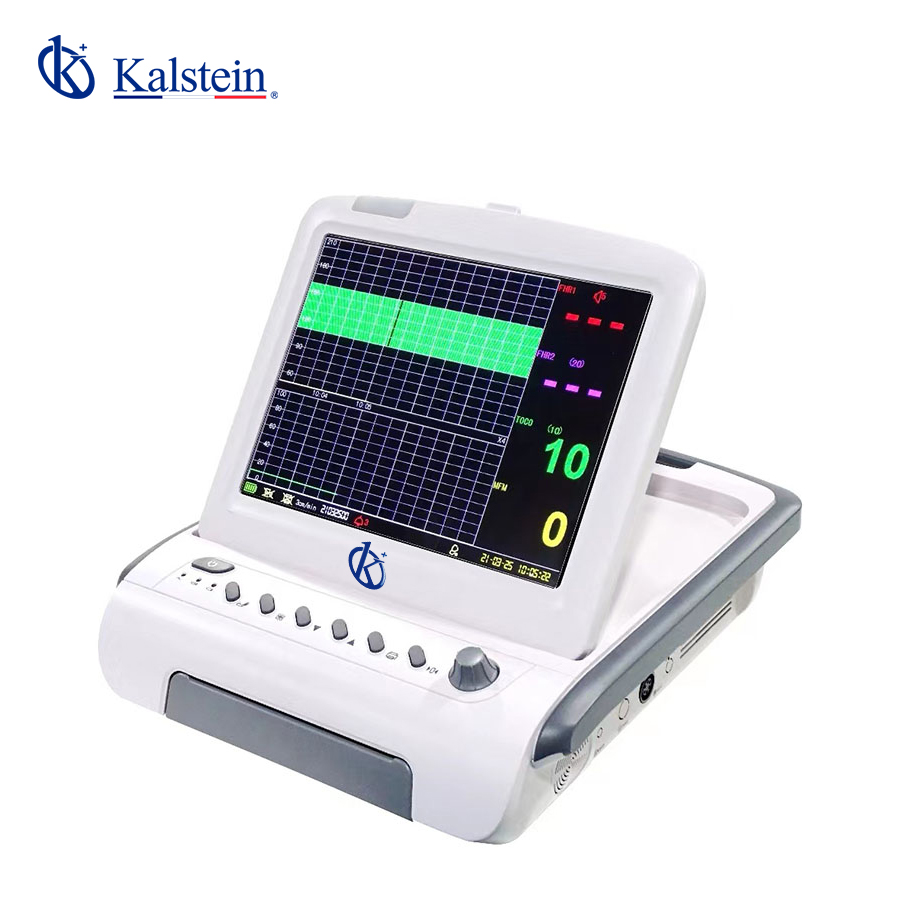
The Fetal Monitor YR02190A offers a comprehensive solution for monitoring maternal and fetal health. With a 12.1-inch color TFT screen that folds up to 90 degrees, this fetal monitor ensures excellent visibility and convenience. It supports six waveforms and includes standard configurations such as SpO2, MHR, NIBP, TEMP, ECG, RESP, TOCO, FHR, and more. Additionally, optional configurations like a fetal stimulator and a second FHR channel enhance its functionality. This device is designed for precision, boasting features like a maximum measurement range for TOCO, and excellent accuracy in SpO2 and NIBP measurements, making it an essential tool in both hospitals and clinics.
This page provides an overview of the Fetal Monitor YR02190A, including selection criteria, investment factors, operational advantages and maintenance recommendations. The aim is to support an informed decision before requesting a quotation.
This Kalstein model is available for laboratories across Latin America, Europe, Africa, the Middle East and Asia, with selection criteria adapted to the diversity of local purchasing, installation and support conditions in each region.
Key factors to consider
Before selecting the Fetal Monitor YR02190A, confirm workflow, available space, required accessories and installation conditions. This prevents oversizing the purchase and helps prepare a more accurate quotation.
The YR02190A is designed for use in a variety of medical settings, from intensive care units to maternity wards. Its robust design enables continuous monitoring of vital signs, providing healthcare professionals with real-time data that is crucial for patient care. The device's portability via an optional trolley is particularly beneficial in dynamic clinical environments.
Across these markets, evaluation should consider varied local contexts such as international laboratory procurement spanning Latin America, Europe, Africa, the Middle East and Asia and match the product to the real workload of the laboratory in each country.
Market price range
The market price for fetal monitors similar to the YR02190A ranges between $2,275.00 and $3,075.60 USD. This range reflects the advanced technology and comprehensive features of the device, ensuring you receive optimal value for your investment. For an exact quote tailored to your needs, we invite you to request a personalized quote via the Kalstein Plus platform today.
The final price may vary according to configuration, accessories, logistics, warranty and territorial availability. Compare the technical sheet with the real laboratory workload before confirming the investment.
Budget comparison varies by country and should include the regulatory requirements specific to each market, the electrical conditions of each region, accessories, logistics and after-sales support.
Value for money
Pros: High-resolution display, versatile configuration options, comprehensive monitoring capabilities. Cons: May require specialized training for optimal use, higher initial investment compared to basic models.
Value for money should be reviewed together with equipment stability, after-sales support, technical documentation and expected service life. A well-matched selection reduces downtime and improves return on investment.
Advantages and disadvantages
The YR02190A is designed for use in a variety of medical settings, from intensive care units to maternity wards. Its robust design enables continuous monitoring of vital signs, providing healthcare professionals with real-time data that is crucial for patient care. The device's portability via an optional trolley is particularly beneficial in dynamic clinical environments.
Main advantages include specialized application, integration with laboratory routines and accessory configuration. Limitations may include installation requirements, user training and preventive maintenance to preserve performance.
Expected lifespan based on use and maintenance
To maintain the optimal performance of the YR02190A, regular calibration and maintenance checks are recommended. Ensure that all sensors and accessories are properly cleaned and stored when not in use. Additionally, attending training sessions if available can maximize the effectiveness and efficiency of the device's use.
Service life depends on usage frequency, cleaning, storage, calibration when applicable and adherence to technical recommendations. A structured maintenance plan helps preserve accuracy, safety and operational continuity.
A support and spare-parts network deployed across Latin America, Europe, Africa, the Middle East and Asia helps preserve service continuity and plan preventive maintenance without extended downtime.
Specifications table for the Fetal Monitor YR02190A
Fetal Monitor YR02190A
- Pantalla: Pantalla TFT en color de 12,1 pulgadas, abatible 90 grados
- Resolución: 800*600
- Trazado: 6 formas de onda (máx.)
- Configuración estándar: SpO2, MHR, NIBP, TEMP, ECG, RESP, TOCO, FHR, FM, Grabadora
- Configuración opcional: Estimulador fetal, FHR2, Carro
| Model | YR02190A |
| FHR | |
| Strength | < 5mW/cm2 |
| Working Frequency | 1.0 MHz |
| Signal Processing | Special DSP system and modern recognition |
| Measurement Range | 50~240 bpm |
| Alarm Range | High Limit: 160, 170, 180, 190 bpm Low Limit: 90, 100, 110, 120 bpm |
| Maximum Audio Output Power | 1.5 watts |
| TOCO | |
| Measurement Range | 0-100 units |
| SpO2 | |
| Measurement Range | 70%~99% |
| Measure Accuracy | ±3% error |
| HR | |
| Measurement Range | 30 bpm~240 bpm |
| Measure Accuracy | ±2 bpm |
| NIBP | |
| Measurement Range | SYS 6.7~32.0 kPa (50~240 mmHg) MEAN: 3.4~26.6 kPa (25~200 mmHg) DIA: 2.0~24.0 kPa (15~180 mmHg) |
| NIBP Accuracy | ±1.1 kPa (±8 mmHg) or ±5% of results, taking the bigger one |
| HR Measurement Range | 40 bpm~240 bpm |
| HR Measure Accuracy | ±2 bpm or ±5% of the results, taking the bigger one. |
| Measure Mode | Manual to start/stop NIBP measurement |
| Temperature | |
| Range | 0~50 ℃ |
| Resolution | 0.1 ℃ |
| Accuracy | 0.1 ℃ (excluded the error caused by transducer) |
| ENVIRONMENT | |
| Working Environment | Temperature: +5℃ ~ +40℃ |
| Atmospheric Pressure | 86 kPa ~ 106 kPa |
| Transport and Storage Temperature | Humidity: < 93% Atmospheric Pressure: 86 kPa ~ 106 kPa |
Products related to model YR02190A

Fetal Monitor YR02190C
Ver producto
Fetal Monitor YR02190B
Ver producto
Multi-parameter patient monitor YR02178 // YR02179
Ver producto
Multi-parameter Patient Monitor YR02177
Ver producto
Doppler Fetal Monitor YR02180
Ver producto
Doppler Ultrasound Fetal Monitor YR02181
Ver producto
Patient Monitors YR02170 // YR02171 // YR02172
Ver producto
Bedside Monitor YR02174
Ver productoFrequently Asked Questions about the Fetal Monitor YR02190A
What is the screen resolution of the YR02190A?
The monitor features a resolution of 800*600, ensuring clear and precise visuals.
Can this monitor measure the fetal heart rate?
Yes, the YR02190A is equipped with FHR measurement capabilities with a range of 50 to 240 bpm.
Is the YR02190A portable?
Yes, it has a foldable screen and can be easily mounted on a trolley for mobility.
How do I choose the right fetal monitor yr02190a for my laboratory?
Selection should start from workload, critical technical parameters, available space and frequency of use. Kalstein can support the comparison between operational needs, budget and maintenance requirements to avoid choosing equipment that is oversized or insufficient.
What should I review before requesting a quotation?
Review the model, technical specifications, required accessories, electrical conditions, consumables, delivery timing and installation needs. With this information, the quotation can be prepared more accurately and aligned with the laboratory workflow.
Does Kalstein provide guidance for this type of equipment?
Yes. The commercial and technical team can support product evaluation, explain differences between models, answer application questions and advise on preventive maintenance, spare parts and documentation required for a secure purchase.
What maintenance helps extend the equipment lifespan?
Follow the manufacturer manual, perform regular cleaning, verify calibrations or controls when applicable, avoid workload abuse and keep maintenance records. Stable use and preventive routines reduce failures and improve operational continuity.