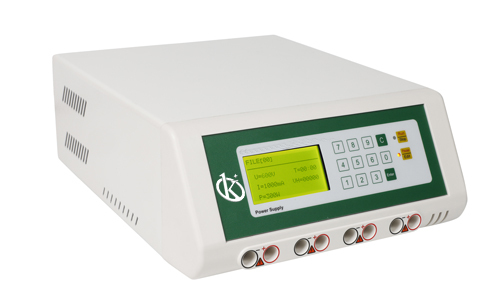
High-Voltage Power Supply in University Research: Essential Use Cases and Selection Criteria
In the realm of university research, high-voltage power supplies play a pivotal role, facilitating a variety of experiments and projects across different scientific disciplines. These devices are crucial for applications in fields such as physics, chemistry, and biological research, where precise control of voltage and current is necessary. The following sections explore various use cases of high-voltage power supplies, detailed comparisons of the available models, and common mistakes encountered in their selection and application.
Understanding High-Voltage Power Supply Applications in Academic Settings
High-voltage power supplies are essential in various university research applications, including electrochemistry experiments, electrophoresis, and semiconductor research. In electrochemistry, they provide the required voltage to drive the electrochemical reactions, which is crucial for obtaining accurate experimental results. Electrophoresis relies on high-voltage supplies for the separation of biomolecules, while semiconductor studies often require precise voltage control for testing components. Understanding these applications helps in selecting the appropriate model that best fits the research requirements.
Key Features of High-Voltage Power Supplies for Research
When selecting a high-voltage power supply for research projects, several features should be considered. These include voltage range, current limits, user-friendly interfaces, programmability, and data logging capabilities. Models such as the YR03409 come equipped with touchscreen controls and dual-core microprocessor technology, making it easy for researchers to set and monitor their experiments. Additionally, features like memory for storing electrophoresis methods enhance productivity and streamline workflows in the lab.
Comparison of Available Models
| Model | Voltage Range | Current Limit | Best For | Price (USD) |
|---|---|---|---|---|
| YR03409 | 20–3000 V | 1–200 mA | Electrophoresis, general studies | 1105.80 |
| YR03408 | 20–5000 V | 1–200 mA | Advanced electrochemical research | 1475.00 |
| YR03405 | 10–600 V | 1–500 mA | Small-scale experiments | 967.20 |
| YR03406 | 20–1600 V | 1–100 mA | Specific applications in biology | 552.00 |
| YR03407 | 20–3000 V | 1–400 mA | Versatile research applications | 1383.00 |
Common Mistakes and How to Avoid Them
When selecting high-voltage power supplies for academic projects, researchers often make common mistakes that can hinder their experiments. One frequent error is underestimating the required voltage and current ranges for specific applications. Researchers should always validate their needs against the specifications of the chosen model. Additionally, neglecting to consider the ease of use and programmability can lead to inefficiencies in the lab. It is prudent to thoroughly assess the user interface and any programmable features available in models such as the YR03408, which offers extensive programmability and ease of operation.
What to Consider When Selecting a High-Voltage Power Supply
Choosing the right high-voltage power supply for university research involves evaluating several factors. First, ascertain the expected voltage and current needs for your specific applications. Models with a higher voltage range, like the YR03408, may be more suitable for advanced electrochemical projects. Additionally, consider the physical space available in your laboratory, as models come in various sizes. Lastly, the budget allocation for laboratory equipment should guide your final decision while ensuring you do not compromise on critical features.
Frequently Asked Questions
How can I determine the appropriate voltage range for my high-voltage power supply?
To determine the appropriate voltage range for your high-voltage power supply, consider the specific requirements of your experiments. For example, if you're conducting electrophoresis, a model like the YR03409, which offers a range of 20–3000 V, may be ideal. Always refer to your experimental protocols to align the voltage requirements with the capabilities of the power supply.
Which high-voltage power supply offers the best programmability for academic research?
The YR03408 high-voltage power supply is one of the best options available for programmability in academic research. With features allowing storage of 100 electrophoresis methods and real-time tuning capabilities, it enhances the flexibility and efficiency of research applications in university settings.
What features should I look for in a high-voltage power supply for biology experiments?
For biology experiments, look for a high-voltage power supply that offers precise control over voltage and current, such as the YR03406. This model features a voltage range of 20–1600 V and is designed for specific applications, making it suitable for biological research where accuracy is paramount.
How do I ensure the safety of my high-voltage power supply during experiments?
Ensuring safety with your high-voltage power supply involves using proper PPE and adhering to safety protocols. Models like the YR03409 include built-in safety features such as automatic overload protection, which helps prevent accidents during experiments. Always follow your institution's safety guidelines when operating high-voltage equipment.
What is the significance of a temperature control function in a high-voltage power supply?
A temperature control function, as seen in models like the YR03409, is significant as it helps maintain the optimal working conditions during experiments. By providing a temperature range of RT+10℃~65℃, it ensures stable operations, which is critical for long-duration experiments that may be sensitive to temperature fluctuations.
How can I optimize the use of a high-voltage power supply in my research lab?
To optimize the use of a high-voltage power supply in your research lab, utilize programmable features and memory functions effectively. For example, the YR03408 allows for storing multiple methods, which can streamline operations and improve throughput in repetitive tasks. This optimization can significantly enhance productivity and reduce the time required for experiments.
Which high-voltage power supply model is the most budget-friendly for educational institutions?
The YR03406 model is one of the most budget-friendly options for educational institutions, priced at $552.00. Its features, including a voltage range of 20–1600 V, make it suitable for various educational experiments without compromising on essential functionalities.
What are the key maintenance practices for high-voltage power supplies in a lab setting?
Key maintenance practices for high-voltage power supplies include regular inspections for damage, ensuring proper ventilation, and validating calibration settings. Models like the YR03407, which includes automatic fault detection features, can assist in identifying issues early, thus helping maintain operational integrity in laboratory settings.
If you are looking for a fusion of innovation and quality, you have come to the right place. At Kalstein, we offer you the luxury of exploring our exclusive catalog of laboratory equipment. We manufacture every device to the highest standards of excellence. Our intuitive and seamless online purchasing channels are designed for your convenience, securing the most competitive prices. Hesitate no longer — we bring science to life, it is time to become part of our community.