How is turbidity measured in a laboratory?
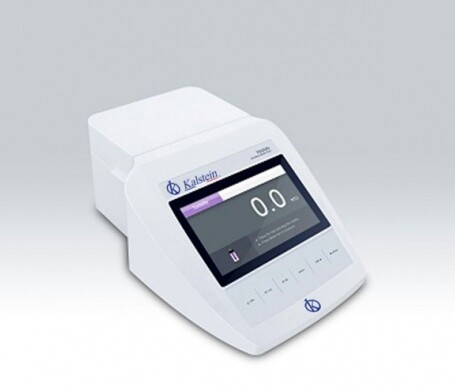
Turbidity is the measure of the opacity or cloudiness of a fluid, it is measured by specialized instruments called turbidimeters. It is considered an essential
Turbidity is the measure of the opacity or cloudiness of a fluid, it is measured by specialized instruments called turbidimeters. It is considered an essential analysis to determine the quality of the water. Turbidity is caused by particles of different sizes that generate an opaque appearance in the sample, and will be greater when there is a higher proportion of undissolved solids in the fluid.
Although it is important to note that turbidity is a measure of the opacity of a liquid. It is not a measure of actual particles in the water.
A turbidimeter is an instrument that allows evaluating how cloudy a fluid is, that is, it determines the turbidity. It achieves this through an optical analysis that allows it to measure the particles in suspension in a dissolved gas or in a liquid. For which it uses a light source and a light detector (a photocell) set at right angles to the original beam.
The photocell is an electronic piece that, when it detects an increase in light, registers a change in its resistance. Depending on how the light source is geometrically arranged, the turbidimeter has different characteristics. Based on the light reflected by the particles towards the photocell, their density is estimated. The properties of particles such as their shape, color and reflectivity.
Turbidity can be estimated with equipment such as a spectrophotometer and a colorimeter, which can measure the decrease in transmitted light due to the blockage generated by the particles. However, these measurements are not considered valid by international regulatory bodies because they do not meet the accepted definition of turbidity.