How to Achieve Effective LIMS Integration with Portable pH Meters
The integration of portable pH meters with Laboratory Information Management Systems (LIMS) is crucial for enhancing data flow and laboratory operations. As laboratories evolve, the necessity for accurate, real-time data transfer becomes increasingly apparent. This article delves into the specifics of achieving seamless integration between portable pH meters and LIMS, focusing on diverse models and their unique capabilities.
Understanding Portable pH Meters in the Context of LIMS Integration
Portable pH meters are essential tools in various laboratory settings, allowing for precise measurements of pH levels in different samples. Their integration with LIMS facilitates automatic data entry, reducing human error, and streamlining workflow processes. For effective integration, it is crucial to select the appropriate pH meter that supports specific connectivity protocols, ensuring compatibility with the LIMS software in use.
Key Models of Portable pH Meters
Several portable pH meters are well-suited for LIMS integration, each with distinctive features that cater to different laboratory needs. Here are some of the most notable models:
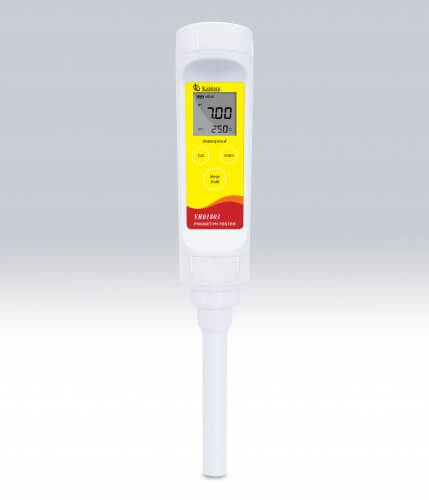
- Pocket pH / °C / °F Meter YR01803: Offers high precision measurements with automatic temperature compensation and a robust design suitable for laboratory and field applications.
- Pocket pH Meter YR01804: Features manual temperature compensation and a BNC connector for electrode connectivity, making it versatile for outdoor usage.
- Pocket pH Meter - °C/°F YR01800: A compact design suitable for on-the-go measurements, with automatic calibration features.
- Pocket pH Meter - °C/°F YR01802: Designed for semisolids, equipped with a dual LCD screen and automatic calibration capabilities.
Comparison of Available Models
| Model | pH Range | Temperature Compensation | Calibration Points | Price (USD) |
|---|---|---|---|---|
| YR01803 | -1.00 to 15.00 pH | Automatic | 1 to 3 | 77.00 |
| YR01804 | -1.00 to 15.00 pH | Manual | 1 to 3 | 75.00 |
| YR01800 | -1.00 to 15.00 pH | Automatic | 1 to 3 | 18.00 |
| YR01802 | -1.00 to 15.00 pH | Automatic | 1 to 3 | 94.00 |
Benefits of LIMS Integration with Portable pH Meters
Integrating portable pH meters with LIMS streamlines laboratory processes, allowing for immediate data capture and reporting. This not only enhances workflow efficiency but also ensures regulatory compliance by maintaining accurate records. With automated data transfers, laboratories can eliminate manual data entry errors, ensuring precise documentation and traceability.
Key Connectivity Protocols for Effective Integration
To successfully implement LIMS integration, it is essential to utilize the correct connectivity protocols. Common protocols include HL7, ASTM, and REST, which facilitate seamless communication between the portable pH meters and the LIMS. Understanding these protocols will help laboratories configure their systems for optimal performance.
Common Mistakes and How to Avoid Them
Implementing LIMS integration can pose challenges, such as selecting incompatible devices or failing to properly configure interfaces. To avoid these pitfalls, laboratories should conduct thorough compatibility assessments before purchasing equipment and ensure that all team members are trained in the integration process. Regular system audits can also help identify and resolve issues early on.
Frequently Asked Questions
What are the benefits of integrating portable pH meters with LIMS in laboratories?
Integrating portable pH meters, such as the YR01803, with LIMS improves data accuracy and workflow efficiency by automating data entry processes and ensuring real-time data availability. This reduces human error and enhances compliance with regulatory standards.
How do different portable pH meters compare in terms of LIMS integration capabilities?
Models like YR01804 and YR01802 offer distinct features for LIMS integration, such as automatic calibration and compatibility with various connectivity protocols, making them suitable for different laboratory environments and needs.
Which connectivity protocols are essential for portable pH meter integration into LIMS?
Protocols like HL7 and ASTM are crucial for effective integration of portable pH meters like YR01800 with LIMS, enabling seamless data transfer and enhancing operational efficiency in laboratory workflows.
What challenges may arise during the integration of portable pH meters with LIMS?
Challenges include compatibility issues between devices and LIMS, as well as potential misconfigurations. Regular training and compatibility assessments can help mitigate these risks when utilizing models like YR01804.
How can laboratories ensure accurate calibration of portable pH meters in a LIMS environment?
Laboratories can ensure accurate calibration by regularly checking calibration points and utilizing models like YR01802, which offer multiple calibration options and automatic temperature compensation for reliable measurements.
What role does data accuracy play in laboratory compliance when using portable pH meters?
Data accuracy is critical for compliance with laboratory regulations. Using integrated portable pH meters like YR01803 helps maintain precise records, enhancing compliance with standards and reducing risks associated with data discrepancies.
How can laboratories maximize the efficiency of portable pH meters integrated with LIMS?
Laboratories can maximize efficiency by selecting models that support connectivity protocols suitable for their LIMS while ensuring staff are trained in data management processes to reduce errors and improve workflow.
If you are looking for a fusion of innovation and quality, you have come to the right place. At Kalstein, we offer you the luxury of exploring our exclusive catalog of laboratory equipment. We manufacture every device to the highest standards of excellence. Our intuitive and seamless online purchasing channels are designed for your convenience, securing the most competitive prices. Hesitate no longer — we bring science to life, it is time to become part of our community.