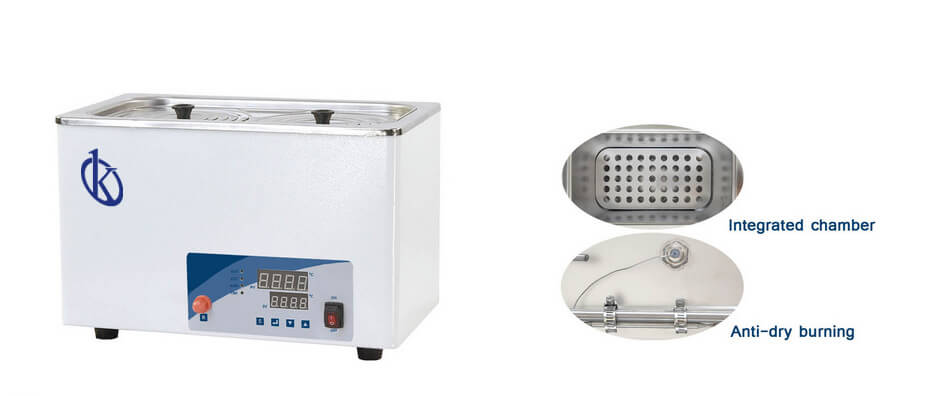
Optimizing Productivity and Reducing Analysis Times with Water Baths
In the fast-paced environment of laboratory work, optimizing productivity while minimizing analysis times is essential for achieving desired outcomes. Water baths serve a crucial role in various laboratory applications, providing a controlled temperature environment for a wide range of tasks from sample preparation to incubation. This article delves into how specific models of water baths can enhance productivity and reduce analysis times, ultimately leading to improved laboratory efficiency.
Understanding the Role of Water Baths in Laboratories
Water baths are indispensable tools in laboratories, providing consistent temperature control for various applications, including heating, thawing, and maintaining samples at specific temperatures. By understanding how to leverage these tools effectively, laboratory professionals can streamline workflows, reduce waiting times, and enhance overall productivity. Different models come equipped with unique features that cater to specific laboratory needs, allowing for better selection based on operational requirements.
Comparison of Available Models
| Model | Temperature Range | Power (W) | Price (USD) | Best for |
|---|---|---|---|---|
| YR05073 | RT +5~100 °C | 300W | 67.00 | Standard laboratory heating |
| YR05074 | RT +5~100 °C | 600W | 80.00 | Increased heating efficiency |
| YR030L | RT~100 °C | 800W | 602.00 | Shaking and incubation |
| YR05001 | -35~200 °C | 3000W | 1974.00 | Chemical reactor cooling |
| YR05002 | -35~200 °C | 6000W | 2646.00 | High capacity cooling |
| YR05003 | -35~200 °C | 6000W | 2982.00 | Versatile chemical applications |
Optimizing Workflow with Water Baths
Water baths can significantly enhance laboratory workflow by providing a consistent environment for sample preparation. For instance, the YR05073 model, with its 300W power, is ideal for standard heating applications. Laboratories can avoid the delays often associated with inconsistent temperatures, thus improving overall efficiency and analysis times. By choosing models equipped with sufficient power and temperature controls, laboratory personnel can conduct experiments more rapidly and accurately.
Reducing Analysis Times with Advanced Features
Advanced features in water baths, such as PID temperature control and digital displays found in models like YR030L, allow for precise temperature management. This model, with its ability to perform shaking and incubation, enables laboratories to conduct simultaneous experiments, effectively reducing analysis times. By integrating timers and automatic shut-off features, these models also minimize the risk of sample degradation due to prolonged exposure to heat.
Maintaining Consistency in Results
Consistency is vital in laboratory analyses, and water baths play a crucial role in achieving this. The YR05074 model, designed with enhanced heating efficiency, helps maintain uniform temperatures even across larger volumes. This uniformity is essential for reproducibility in results, which is a cornerstone of scientific research. Implementing water baths with robust temperature regulation ensures that all samples are treated equally, thus improving data reliability.
Common Mistakes and How to Avoid Them
One common mistake in using water baths is not selecting the right model for specific applications. Failing to assess the temperature requirements and the volume of samples can lead to inefficiencies. Additionally, neglecting to regularly calibrate the water bath can result in temperature inconsistencies. To avoid these pitfalls, it is essential to carefully review model specifications and maintain a regular calibration schedule to ensure optimal performance.
FAQs
How can a water bath improve productivity in laboratory environments?
A water bath enhances productivity by providing a controlled and consistent temperature for various applications, allowing for faster and more reliable sample processes. Models like YR05073 are designed specifically for standard heating tasks, ensuring that laboratory workflows are more efficient and analysis times are reduced.
What features should I look for in a water bath to reduce analysis times?
Key features to consider include adjustable temperature controls, PID regulation, and timers. For instance, the YR030L model offers shaking capabilities alongside precise temperature management, which can significantly decrease analysis times by performing multiple tasks simultaneously.
How does the YR05074 model enhance heating efficiency?
The YR05074 model is designed for increased heating efficiency, featuring powerful heating elements that deliver rapid temperature adjustments. This allows for quicker sample preparation and reduces waiting times during experiments, thus streamlining laboratory processes.
What is the ideal temperature range for routine laboratory heating?
The ideal temperature range for routine laboratory heating typically falls between RT +5 to 100 °C. Models such as YR05073 and YR05074 are well-suited for these applications, providing stable conditions necessary for a variety of laboratory tasks.
How can I ensure the accuracy of my water bath readings?
To ensure the accuracy of water bath readings, regular calibration is essential. Utilizing models like YR05003, which feature digital controls, can help maintain precise temperature settings and allow for easy adjustments and monitoring of temperature readings.
Which water bath model is best for chemical reactor applications?
The YR05001 model is particularly effective for chemical reactor applications, offering a wide temperature range of -35 to 200 °C. This versatility allows laboratories to perform various cooling and heating tasks efficiently, making it a preferred choice for such scenarios.
What are the advantages of using a water bath shaker?
A water bath shaker, such as the YR030L, provides the dual function of maintaining temperature while also agitating samples, which is beneficial for tasks like bacterial culture growth or chemical reactions that require mixing. This capability enhances productivity by allowing for simultaneous temperature control and mixing.
How often should a water bath be maintained to ensure optimal performance?
Regular maintenance of a water bath, including cleaning and calibration, should be performed at least once every three months. This schedule ensures that models like YR05074 operate efficiently and maintain consistent temperature controls essential for accurate laboratory results.
If you are looking for a fusion of innovation and quality, you have come to the right place. At Kalstein, we offer you the luxury of exploring our exclusive catalog of laboratory equipment. We manufacture every device to the highest standards of excellence. Our intuitive and seamless online purchasing channels are designed for your convenience, securing the most competitive prices. Hesitate no longer — we bring science to life, it is time to become part of our community.