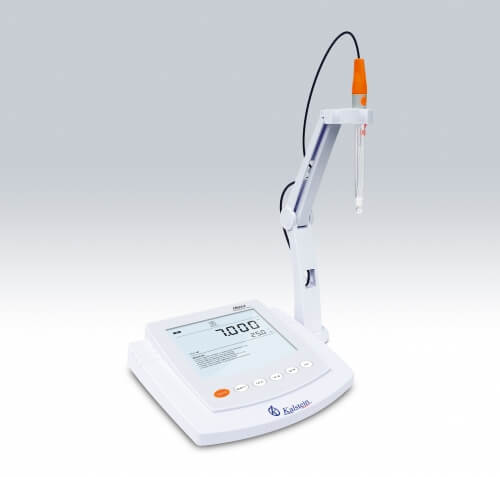
How to Implement Predictive Maintenance and Recommended Calibration for Table Conductivity Controllers
In laboratory settings, the accuracy and reliability of measurements are critical. Table conductivity controllers play a vital role in various applications, from chemical analysis to environmental monitoring. However, to maintain their performance, it is essential to implement predictive maintenance and adhere to recommended calibration protocols. This article will explore these themes in depth, focusing on the importance of consistent calibration and maintenance practices for table conductivity controllers.
Understanding Predictive Maintenance
Predictive maintenance is an approach that uses data analysis tools and techniques to predict when equipment failure might occur. This allows laboratories to perform maintenance at the right time, reducing downtime and maintaining operational efficiency. For table conductivity controllers, predictive maintenance involves monitoring performance indicators to determine when calibration or servicing is needed.
Using predictive analytics, laboratory professionals can assess critical performance indicators such as drift rates, accuracy deviations, and overall functionality. Implementing a predictive maintenance strategy involves:
- Establishing baseline performance metrics.
- Regularly analyzing operational data.
- Scheduling maintenance based on predictive insights rather than routine intervals.
This proactive approach can extend the lifespan of the equipment and ensure accurate measurements, which is essential for compliance with regulatory standards.
Importance of Calibration for Table Conductivity Controllers
Calibration is the process of adjusting the accuracy of a measurement device by comparing its output with a known standard. For table conductivity controllers, calibration is vital for ensuring data accuracy and reliability. Regular calibration helps to:
- Minimize measurement uncertainty.
- Comply with quality assurance protocols such as ISO 17025.
- Meet regulatory requirements for laboratory operations.
Each table conductivity controller requires specific calibration intervals, often dependent on usage frequency and environmental conditions. Understanding the calibration process and its significance can greatly improve laboratory efficiency.
Recommended Calibration Intervals
Calibration intervals may vary based on several factors, such as the model of the table conductivity controller and its application. As a general guideline, the following calibration intervals are recommended:
| Model | Recommended Calibration Interval | Usage Context |
|---|---|---|
| YR01836-1 | Every 6 months | High precision applications |
| YR01836 | Every 3 to 6 months | Routine testing |
| YR01829-1 | Every 3 months | Daily quality control |
| YR01829-2 | Every 3 months | Daily quality control |
| YR01829 | Every 6 months | Routine laboratory analysis |
| YR01828 | Every 6 months | Environmental monitoring |
It is crucial to document calibration activities and maintain records to ensure traceability and compliance with laboratory standards.
Comparison of Available Models
| Model | Calibration Features | Best for | Price (USD) |
|---|---|---|---|
| YR01836-1 | 1 to 5 points, auto-recognition | High precision testing | 355.00 |
| YR01836 | Automatic calibration, USB connectivity | Routine testing | 199.00 |
| YR01829-1 | 1 to 3 points, auto-recognition | Daily quality control | 160.00 |
| YR01829-2 | 1 to 3 points, auto-recognition | Daily quality control | 235.00 |
| YR01829 | Automatic calibration, Bluetooth | Advanced laboratory analysis | 285.00 |
| YR01828 | Automatic calibration, Bluetooth | Environmental monitoring | 232.00 |
Common Mistakes and How to Avoid Them
When implementing predictive maintenance and calibration for table conductivity controllers, laboratory professionals may encounter several common pitfalls:
- Neglecting documentation: Always record calibration dates and results to ensure compliance and traceability.
- Inconsistent calibration intervals: Adhere strictly to recommended intervals based on usage to prevent measurement inaccuracies.
- Ignoring drift rates: Regularly monitor performance indicators to identify when recalibration is necessary.
Avoiding these mistakes requires a systematic approach to maintenance and calibration, ensuring the equipment remains in optimal condition.
Frequently Asked Questions
What are the ideal calibration intervals for table conductivity controllers in 2026?
The ideal calibration intervals for table conductivity controllers should generally be every 3 to 6 months, depending on the model. For instance, models like YR01829-1 and YR01829-2 are recommended for calibration every 3 months due to their daily quality control applications.
How can predictive maintenance improve the reliability of conductivity measurements?
Predictive maintenance enhances the reliability of conductivity measurements by analyzing performance data to anticipate equipment failures. This proactive approach allows the laboratory to schedule maintenance before issues arise, ensuring models like YR01836-1 remain accurate and reliable.
Which table conductivity controllers support automatic calibration features?
Models such as YR01836 and YR01829 feature automatic calibration capabilities. This feature reduces human error and simplifies the calibration process, ensuring consistent accuracy in measurements.
How does regular calibration affect compliance with ISO 17025 standards?
Regular calibration is crucial for complying with ISO 17025 standards, as accurate measurement is a key requirement. Models like YR01828, when calibrated according to their recommended schedules, help maintain the precision necessary for regulatory compliance.
What are the consequences of neglecting predictive maintenance for conductivity controllers?
Neglecting predictive maintenance can lead to equipment failure, inaccurate measurements, and costly downtime. For example, a model like YR01829 may drift out of specification if not regularly monitored and maintained.
How can I ensure my conductivity meter remains within specified accuracy limits?
To keep your conductivity meter within specified accuracy limits, implement a strict calibration schedule and utilize models with features like auto-recognition of calibration standards, as seen in the YR01836-1.
What role does temperature compensation play in calibrating conductivity meters?
Temperature compensation is essential during calibration as it ensures accurate conductivity readings across varying temperatures. Models such as YR01829-1 utilize automatic temperature compensation to maintain accuracy, which is crucial for reliable measurements.
How can I integrate data from conductivity controllers into laboratory management systems?
Integrating data from conductivity controllers into laboratory management systems can be achieved through models like YR01836, which offer USB connectivity for easy data transfer. This integration supports enhanced data management and analysis.
If you are looking for a fusion of innovation and quality, you have come to the right place. At Kalstein, we offer you the luxury of exploring our exclusive catalog of laboratory equipment. We manufacture every device to the highest standards of excellence. Our intuitive and seamless online purchasing channels are designed for your convenience, securing the most competitive prices. Hesitate no longer — we bring science to life, it is time to become part of our community.