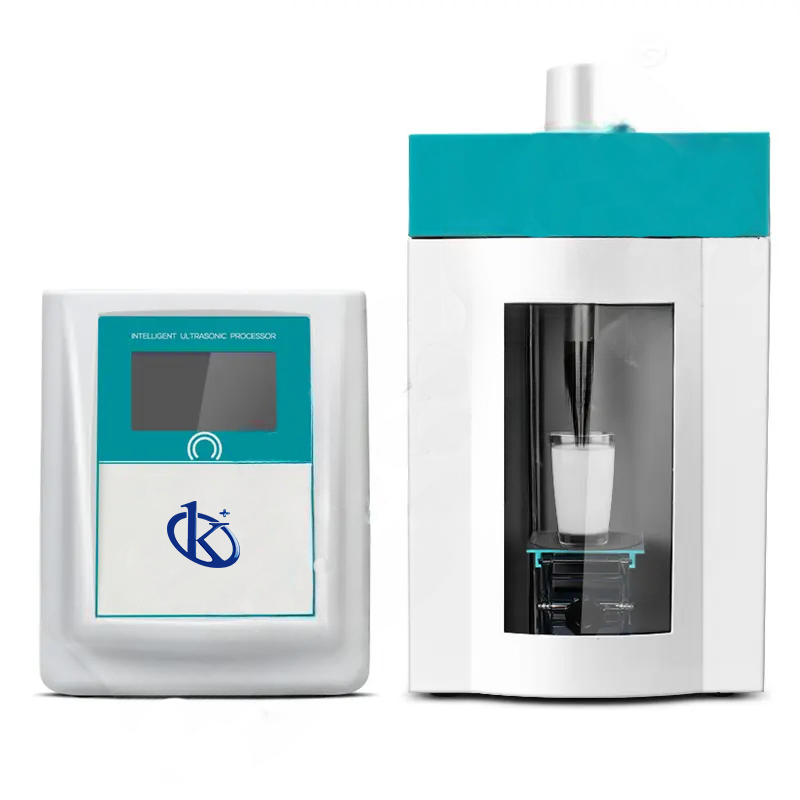
How to Implement Predictive Maintenance and Recommended Calibration for Ultrasonic Homogenizers
In laboratory settings, ultrasonic homogenizers play a crucial role in sample preparation, emulsification, and particle size reduction. However, to ensure optimal performance and longevity, these devices require proper maintenance and calibration. This article focuses on predictive maintenance strategies and recommended calibration practices specifically for ultrasonic homogenizers.
Understanding Predictive Maintenance for Ultrasonic Homogenizers
Predictive maintenance (PdM) involves monitoring equipment condition to predict failures before they occur. This proactive approach can significantly reduce downtime and maintenance costs. For ultrasonic homogenizers, implementing PdM involves tracking performance metrics, such as vibration, temperature, and power consumption, allowing for timely interventions.
Key benefits of predictive maintenance include enhanced reliability, reduced maintenance costs, and improved operational efficiency. By utilizing sensors and data analysis, laboratories can forecast maintenance needs, ensuring that ultrasonic homogenizers like the YR05017 operate at peak performance.
Recommended Calibration Practices for Ultrasonic Homogenizers
Calibration ensures that ultrasonic homogenizers produce reliable and accurate results. Regular calibration should be based on a pre-defined schedule, influenced by usage frequency and regulatory requirements. For instance, the recommended calibration frequency for the YR05019 may vary depending on its application but generally ranges from quarterly to semi-annually.
Calibration protocols should include verification of parameters such as ultrasonic power output, frequency stability, and temperature control. Utilizing standardized calibration solutions can help maintain accuracy. It's essential to document each calibration session for traceability and compliance with ISO standards.
Comparison of Available Models
| Model | Power (W) | Mixing Capacity (ml) | Frequency Range (KHz) | Recommended Calibration Frequency |
|---|---|---|---|---|
| YR05015 | 1.5 – 150 | 0.1 – 150 | 20 – 25 | Quarterly |
| YR05016 | 2 – 250 | 0.1 – 300 | 20 – 25 | Quarterly |
| YR05017 | 10 – 650 | 0.1 – 500 | 20 – 25 | Biannually |
| YR05018 | 10 – 900 | 0.1 – 600 | 20 – 25 | Biannually |
| YR05019 | 20 – 1200 | 1 – 1000 | 20 – 25 | Annually |
| YR05020 | 50 – 1800 | 1 – 1200 | 20 – 25 | Annually |
Common Mistakes and How to Avoid Them
When conducting maintenance and calibration on ultrasonic homogenizers, several common mistakes can arise. One of the most frequent errors is neglecting to follow a systematic calibration schedule. This can result in performance degradation over time. It is crucial to allocate resources for regular checks based on the manufacturer's recommendations.
Another mistake is overlooking the importance of documentation. Proper records help maintain compliance with regulations and can serve as a reference for future calibrations. Utilizing a digital management system can simplify this process and ensure that data is readily available.
Best Practices for Predictive Maintenance
Implementing best practices in predictive maintenance can enhance the lifecycle of ultrasonic homogenizers. Regularly monitoring the performance metrics of models such as the YR05016 can provide insights into its operational health. Additionally, using condition-based monitoring tools can help detect early signs of potential failures.
Establishing a maintenance log that records parameters such as usage hours, maintenance actions, and performance anomalies can further improve predictive strategies. Leveraging software solutions for data analysis can streamline this process, providing actionable insights for laboratory management.
Calibration Intervals and Their Importance
Calibration intervals are vital for ensuring consistent performance in ultrasonic homogenizers. The recommended calibration frequency often depends on specific usage scenarios. For instance, high-throughput environments may necessitate more frequent calibration for models like YR05020 to maintain accuracy.
Calibration should align with industry standards, such as ISO/IEC 17025, to ensure that laboratories meet required quality benchmarks. Regular assessments of the calibration status will ultimately lead to improved results and operational reliability.
Frequently Asked Questions
What are the key benefits of predictive maintenance for ultrasonic homogenizers?
Predictive maintenance can significantly enhance the performance and reliability of ultrasonic homogenizers like the YR05015 by identifying potential issues before they lead to failure, thus reducing downtime and maintenance costs.
How often should ultrasonic homogenizers be calibrated to maintain compliance?
The calibration frequency for ultrasonic homogenizers varies; typically, models like the YR05019 should be calibrated at least annually to ensure compliance with quality standards and reliability in results.
What metrics are essential for monitoring ultrasonic homogenizer performance?
Key performance metrics for ultrasonic homogenizers include power output, frequency stability, and temperature control. Tracking these metrics can help predict maintenance needs and enhance operational efficiency.
What is the impact of neglecting calibration on ultrasonic homogenizers?
Neglecting calibration can result in reduced accuracy and reliability in ultrasonic homogenizer operations. For instance, failure to calibrate the YR05018 could lead to inconsistent emulsification results, compromising the quality of laboratory outputs.
How can I document calibration processes for ultrasonic homogenizers?
Documentation can be effectively maintained through a structured log that records calibration dates, results, and adjustments made. Utilizing software solutions can streamline this process and ensure compliance with standards like ISO 17025.
What tools can assist in implementing predictive maintenance for ultrasonic homogenizers?
Condition monitoring tools and data analysis software are essential for implementing predictive maintenance. For example, systems integrated with the YR05020 can provide real-time performance metrics to forecast maintenance needs.
How can I ensure compliance with standards for ultrasonic homogenizers?
To ensure compliance with standards, ultrasonic homogenizers like the YR05017 should undergo regular calibration and maintenance, following a structured schedule in line with ISO/IEC 17025 requirements.
What should I consider when choosing an ultrasonic homogenizer model for my lab?
When selecting an ultrasonic homogenizer, consider factors such as power output, mixing capacity, and the recommended calibration frequency. For high demands, models like the YR05019 might be more suitable due to their higher capacity and power.
If you are looking for a fusion of innovation and quality, you have come to the right place. At Kalstein, we offer you the luxury of exploring our exclusive catalog of laboratory equipment. We manufacture every device to the highest standards of excellence. Our intuitive and seamless online purchasing channels are designed for your convenience, securing the most competitive prices. Hesitate no longer — we bring science to life, it is time to become part of our community.