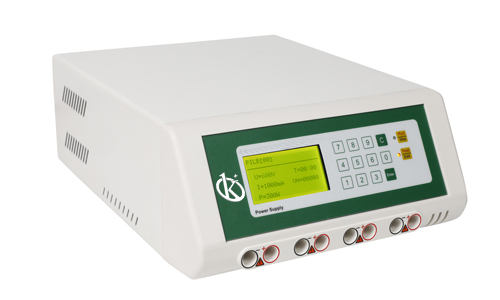
Understanding ROI and Cost-Benefit Analysis for High-Voltage Power Supplies in Laboratories
In laboratory settings, the choice of equipment is crucial to operational efficiency and cost management. High-voltage power supplies are essential for various experimental setups and processes, making their selection and investment a significant factor in achieving a positive return on investment (ROI) and favorable cost-benefit ratios. This article delves into the specific aspects of ROI and cost-benefit analysis related to high-voltage power supplies, providing a comprehensive understanding of the models available in the market, including their features, costs, and applications.
Framing High-Voltage Power Supplies through ROI and Cost-Benefit Analysis
High-voltage power supplies serve multiple functions in laboratories, from powering electrophoresis systems to providing the necessary energy for various testing applications. However, choosing the right model involves evaluating not just the initial investment but also the long-term benefits it can yield. A robust ROI analysis takes into account capital expenditures (CAPEX), operational expenditures (OPEX), maintenance costs, and the potential savings generated through improved efficiency and reduced downtime.
Comparison of Available Models
| Model | CAPEX (USD) | Output Range | Best for |
|---|---|---|---|
| YR03409 | 1105.80 | 20–3000 V, 1–200 mA | Electrophoresis with temperature control |
| YR03408 | 1475.00 | 20–5000 V, 1–200 mA | Complex electrophoresis methods |
| YR03405 | 967.20 | 10–600 V, 1–500 mA | Routine laboratory use |
| YR03406 | 552.00 | 20–1600 V, 1–100 mA | Low-power applications |
| YR03407 | 1383.00 | 20–3000 V, 1–400 mA | Advanced laboratory experiments |
Evaluating Capital Expenditures (CAPEX) and Operational Expenditures (OPEX)
Capital expenditures (CAPEX) are the initial investments made in high-voltage power supplies. For instance, the model YR03408, priced at $1475.00, can be seen as a significant investment. However, when evaluating its OPEX, which includes maintenance, energy consumption, and operational efficiency, it becomes apparent that higher CAPEX can lead to lower OPEX in the long run. For example, the advanced features of YR03409 can result in significant savings due to reduced failure rates and efficient energy use.
Payback Period Analysis
Calculating the payback period for high-voltage power supplies helps labs understand how quickly they can recover their initial investment. For example, if a laboratory using the YR03406 model saves $200 annually in reduced energy costs and maintenance, with an initial investment of $552.00, the payback period would be approximately 2.76 years. Understanding these figures informs decision-making regarding which model to purchase.
Comparative Features of High-Voltage Power Supplies
When comparing high-voltage power supplies, it is important to evaluate their features based on laboratory needs. For instance, models like YR03408 and YR03409 come equipped with advanced features such as a dual-core microprocessor and multiple output settings. These capabilities can enhance laboratory performance and lead to better outcomes, justifying their higher cost compared to simpler models.
Cost per Test and Efficiency Metrics
The cost per test is a critical metric for laboratories focused on budget management. For example, if the YR03405 model allows for 1000 operations at a total cost of $967.20, the cost per test would be $0.967. This metric helps labs determine long-term savings and operational efficiency. Utilizing models with lower costs per test can increase profitability in high-demand scenarios.
Common Mistakes and How to Avoid Them
One of the common mistakes laboratories make is underestimating the total cost of ownership (TCO) for high-voltage power supplies. It is essential to factor in not only the purchase price but also ongoing operational costs, maintenance, and potential downtime. Another mistake is failing to analyze the specific laboratory needs adequately. Choosing a model without assessing output requirements or the expected usage can lead to inefficiencies and wasted resources.
Frequently Asked Questions
How can I calculate the ROI for a high-voltage power supply in my lab?
To calculate ROI for a high-voltage power supply, determine the total investment cost, including the model's price like YR03409 ($1105.80). Then, assess the annual savings and efficiency gains from using the equipment. Subtract the total costs from the savings, then divide by the total costs to get ROI.
What are the key features to consider when selecting a high-voltage power supply?
Key features include output range, control systems, and storage capabilities. For instance, the YR03408 offers a comprehensive output range of 20–5000 V and can store 100 electrophoresis methods, making it suitable for advanced applications.
Which high-voltage power supply is best for routine laboratory tasks?
The YR03405 model is ideal for routine tasks with its output range of 10–600 V and competitive price of $967.20. It provides a balance of features and cost-effectiveness for standard laboratory operations.
What is the operational lifespan of high-voltage power supplies like the YR03406?
The operational lifespan of the YR03406 and similar models can exceed 5 years with proper maintenance. Regular checks and adherence to operational guidelines can ensure longevity and reliability.
How do maintenance costs affect the choice of a high-voltage power supply?
Maintenance costs can significantly impact the total cost of ownership. Models like YR03407, with advanced monitoring features, may incur lower maintenance costs due to their reliability, justifying a higher initial investment.
What role does energy efficiency play in the selection of high-voltage power supplies?
Energy efficiency is crucial in reducing operational costs. Choosing a model with efficient energy consumption, such as the YR03409, can lead to significant long-term savings, making it a financially sound choice.
How does temperature control impact the performance of high-voltage power supplies?
Temperature control can enhance the performance of high-voltage power supplies. The YR03409 model, for example, includes temperature control features, ensuring stable output and reducing the risk of equipment failure.
What are the benefits of investing in high-voltage power supplies with advanced features?
Investing in high-voltage power supplies with advanced features can lead to improved operational efficiency, better test accuracy, and reduced downtime. Models like YR03408 provide numerous functionalities that benefit complex laboratory environments.
If you are looking for a fusion of innovation and quality, you have come to the right place. At Kalstein, we offer you the luxury of exploring our exclusive catalog of laboratory equipment. We manufacture every device to the highest standards of excellence. Our intuitive and seamless online purchasing channels are designed for your convenience, securing the most competitive prices. Hesitate no longer — we bring science to life, it is time to become part of our community.