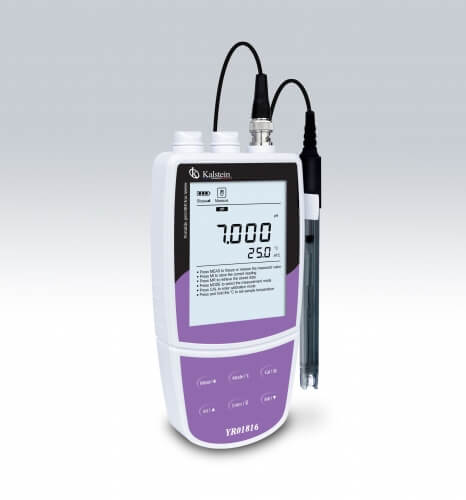
Technical Glossary and Key Terminology of the YR01817 Portable Ammonium Ion Meter
The YR01817 portable ammonium ion meter represents a significant advancement in the measurement of ammonium ion concentrations. Whether you are in a clinical lab, environmental monitoring, or educational settings, having a comprehensive understanding of the technical terms related to this device is essential. This article offers an in-depth glossary of key terminology associated with the YR01817 model, helping operators leverage its functionalities to their fullest potential.
Overview of the YR01817 Portable Ammonium Ion Meter
The YR01817 is a professional-grade portable ammonium ion meter designed for precise outdoor applications. With features such as a backlit LCD screen, multi-point calibration, and automatic temperature compensation, it ensures accurate results across a wide range of conditions. Understanding the terminology involved in its operation is critical for effective usage.
Technical Specifications of the YR01817
| Model | YR01817 | Manufacturer | Kalstein |
|---|---|---|---|
| Category | Ion Meter | Subcategory | Portable Ion Meter |
| Price (USD) | 172.00 | Price (EUR) | 1000 |
| Weight (gross) | 1.50 kg | Dimensions | 170 x 85 x 30 mm |
Glossary of Technical Terms Related to the YR01817
| Term | Definition |
|---|---|
| Ammonium Ion | A positively charged ion (NH4+) that is derived from ammonia, commonly found in fertilizers and water. |
| Calibration | The process of adjusting the meter to ensure accurate measurements by comparing it to known standards. |
| Backlit LCD | A liquid crystal display that is illuminated from behind, allowing for ease of reading in low-light conditions. |
| Temperature Compensation | The automatic adjustment made by the meter to account for variations in temperature that could affect measurement accuracy. |
| PPM | Parts per million, a unit of measurement for concentration used frequently in water quality assessments. |
| USB Communication Interface | A feature that allows data transfer to and from the meter for record-keeping and analysis. |
| Resolution | The smallest increment that can be measured by the device, enhancing the precision of readings. |
| Stability Criteria | Guidelines that determine when a measurement is stable enough to be taken as accurate. |
| Error Code | A numeric or alphanumeric code displayed by the meter indicating a malfunction or issue that requires attention. |
| Memory Storage | The capability of the meter to retain measurement data for later retrieval, with a capacity of up to 500 datasets. |
| Electrode Diagnosis | The automatic checking of the electrode performance to ensure it meets operational standards. |
| Calibration Alarm | A notification feature that alerts users when calibration is overdue, ensuring ongoing accuracy. |
| Rugged Design | The construction of the device aimed at withstanding harsh conditions in field applications. |
Importance of Understanding Key Terminology
Familiarity with the terminology associated with the YR01817 is critical for users to effectively operate the device. Proper understanding enables accurate troubleshooting, efficient calibration, and confident data interpretation. The glossary provided here aids in bridging knowledge gaps and empowers users to maximize the capabilities of the YR01817.
Frequently Asked Questions
What types of applications is the YR01817 suitable for?
The YR01817 is ideal for a variety of applications, including environmental monitoring, water quality testing in clinical labs, and educational purposes where precise measurement of ammonium ions is required.
How do I calibrate the YR01817 portable ammonium ion meter?
Calibration involves adjusting the meter with known standards. The YR01817 supports 2 to 5 points of calibration across a range of concentrations, allowing for high flexibility in setup to ensure accurate measurements.
What are the benefits of using a portable ion meter like the YR01817?
Using a portable ion meter like the YR01817 offers convenience for on-site measurements, high accuracy with automatic temperature compensation, and easy data management through USB connectivity.
What should I do if the YR01817 displays an error code?
Refer to the device’s manual for troubleshooting steps. Common solutions involve checking the electrode connections, recalibrating the device, or addressing any malfunctions indicated by the error code.
How often should I calibrate the YR01817?
Calibration should be performed regularly, depending on usage frequency. The calibration alarm feature of the YR01817 alerts users when calibration is required, typically every 1 to 31 days based on the user’s settings.
Can the YR01817 store measurement data?
Yes, the YR01817 has the capability to store up to 500 sets of measurement data, which can be retrieved via its USB communication interface for further analysis.
What are the main technical specifications of the YR01817?
Main specifications include a measurement range of 5 × 10⁻⁶ to 1 M for ammonium ion concentration, ±0.5% FS accuracy, and various units of measurement including ppm, mg/L, and mol/L.
If you are looking for a fusion of innovation and quality, you have come to the right place. At Kalstein, we offer you the luxury of exploring our exclusive catalog of laboratory equipment. We manufacture every device to the highest standards of excellence. Our intuitive and seamless online purchasing channels are designed for your convenience, securing the most competitive prices. Hesitate no longer — we bring science to life, it is time to become part of our community.