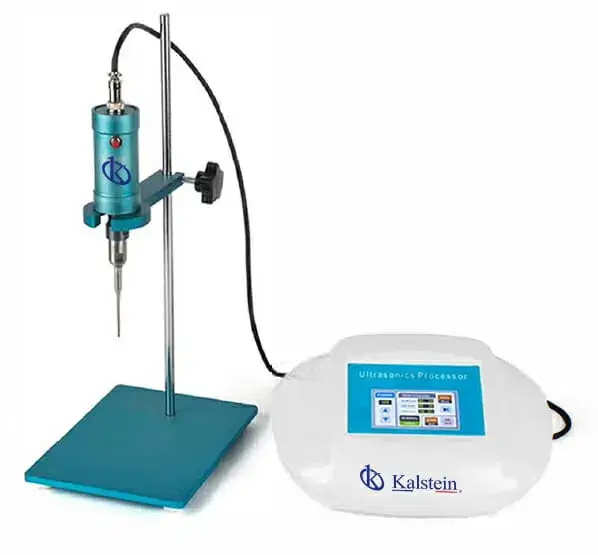
Technical Glossary and Key Terminology for the YR05831 Ultrasonic Homogenizer
The YR05831 Ultrasonic Homogenizer Processor Sonicator is a multifunctional instrument widely used in various scientific fields for liquid processing. Understanding the technical terms related to this device is crucial for effective operation and maintenance. This article provides a comprehensive glossary of key terminology associated with the YR05831, ensuring users can leverage its full potential.
Understanding the YR05831 Ultrasonic Homogenizer
The YR05831 model is designed to utilize ultrasonic waves to create cavitation effects in liquids. This principle allows it to homogenize, emulsify, and disperse materials effectively. The equipment is equipped with a digital ultrasonic generator, enhancing its reliability and stability. In fields such as biochemistry, microbiology, and chemical engineering, the YR05831 finds extensive application.
Technical Specifications of the YR05831
| Model | Power Mode | Display Size | Ultrasonic Power (W) | Frequency (KHz) | Temperature Control | Dimensions (mm) | Weight (kg) |
|---|---|---|---|---|---|---|---|
| YR05831 | Automatic, Manual | 3.5 inch Touch Screen | 5-400 | 19-25 | Optional Temperature Probe | 35 x 25 x 25 | 5.8 |
Key Terminology Glossary
| Term | Definition |
|---|---|
| Cavitation | The formation of vapor cavities in a liquid, leading to intense pressure waves that contribute to homogenization and emulsification. |
| Homogenization | The process of making a mixture uniform in composition, often achieved using ultrasonic waves in the YR05831. |
| Emulsification | The process of mixing two immiscible liquids, such as oil and water, to create a stable emulsion. |
| Sonication | The application of ultrasonic waves to agitate particles in a sample, enhancing processes like extraction and dispersion. |
| Transducer | A device that converts electrical energy into ultrasonic energy, crucial for the operation of the YR05831. |
| Amplitude | The height of the ultrasonic waves, which affects the intensity of the homogenization process. |
| Frequency | The number of cycles per second of the ultrasonic waves, influencing the performance of the homogenizer. |
| Ultrasonic Power | The power output of the ultrasonic device, measured in watts, indicating its effectiveness in processing materials. |
| Microprocessor Control | A system that automates the operation of the YR05831, allowing for precise control over various parameters. |
| Dispersion | The process of distributing solid particles uniformly within a liquid, crucial for achieving consistent sample quality. |
| Extraction | The process of isolating a substance from a mixture, often facilitated by sonication to enhance yield. |
| Deaeration | The removal of air bubbles from a liquid, which is important in processes like emulsification to prevent instability. |
| Temperature Control | The ability to maintain or adjust the temperature of the sample during processing, crucial for sensitive materials. |
| Sample Volume | The quantity of liquid being processed, which can range from milliliters to liters in the YR05831. |
| Power Supply | The source of electrical energy, typically 220V/50Hz, required for the operation of the YR05831. |
| Calibration | The process of adjusting the settings of the device to ensure accurate and reliable measurements. |
Frequently Asked Questions
What is the cavitation effect and how does it relate to the YR05831?
The cavitation effect is a phenomenon that occurs when ultrasonic waves create bubbles in a liquid that implode, releasing energy that helps in breaking down materials. In the YR05831, this effect is harnessed to improve processes like homogenization and emulsification, making it an invaluable feature of the device.
How do I set up the YR05831 for the first time?
Setting up the YR05831 involves unboxing the equipment, ensuring proper anchoring and leveling, and connecting it to the power supply. After power-up, a calibration process is typically recommended to ensure accurate operation. Following these steps can help avoid common setup mistakes.
What are some common troubleshooting tips for the YR05831?
Common issues with the YR05831 may include inconsistent readings or failure to power on. It is essential to check connections, verify the power supply, and ensure the device is correctly calibrated. For persistent issues, consulting the user manual or technical support may be necessary.
How do I maintain the YR05831 for optimal performance?
Regular maintenance of the YR05831 includes cleaning the transducer and ensuring that the ultrasonic probes are free of residues. It's also crucial to conduct periodic checks on the power supply and perform software updates to maintain optimal performance.
What applications can the YR05831 be used for?
The YR05831 is versatile and can be used for a variety of applications, including drug extraction, cellular disruption, emulsification of nanoparticles, and even chemical reactions acceleration. Its capabilities make it suitable for use in laboratories across different scientific fields.
Are there any safety precautions I should consider while using the YR05831?
Yes, when operating the YR05831, it is essential to wear appropriate personal protective equipment (PPE), such as gloves and goggles. Ensure the work area is clear of unnecessary materials, and adhere to the manufacturer's safety guidelines to prevent any accidents.
How can I request a quote for the YR05831?
To request a quote for the YR05831, you can reach out through our sales channels for personalized assistance, ensuring you receive the best pricing options available.
If you are looking for a fusion of innovation and quality, you have come to the right place. At Kalstein, we offer you the luxury of exploring our exclusive catalog of laboratory equipment. We manufacture every device to the highest standards of excellence. Our intuitive and seamless online purchasing channels are designed for your convenience, securing the most competitive prices. Hesitate no longer — we bring science to life, it is time to become part of our community.