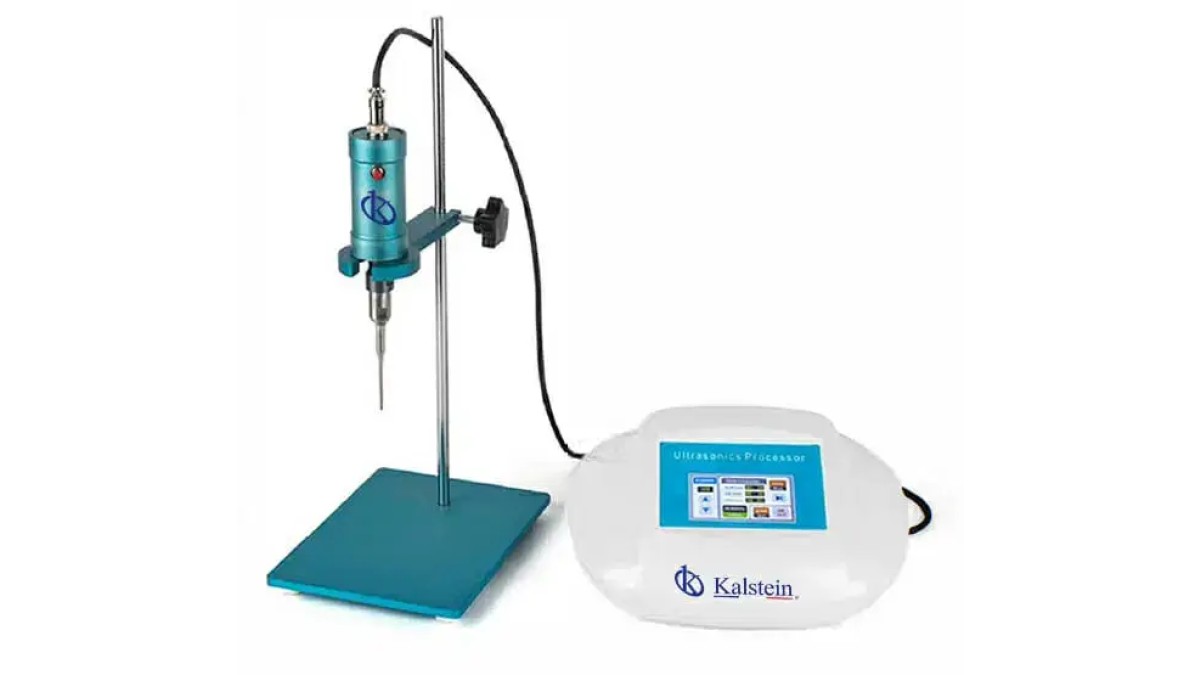
Ultrasonic Homogenizers: Best Techniques and Protocols in 2026
Ultrasonic homogenizers have become an essential tool in laboratories worldwide, providing efficient methods for liquid processing through ultrasonic waves. This article aims to give laboratory professionals a comprehensive understanding of how to effectively use these devices, including applications, techniques, and best practices in 2026.
What is it used for in 2026
Ultrasonic homogenizers are primarily used for a variety of applications including cell disruption, emulsification, homogenization, extraction, and dispersion. They employ ultrasonic waves to create cavitation bubbles in liquids that collapse under high pressure, leading to intense shearing forces that break apart particles, cells, or droplets. In 2026, their applications have expanded to include:
- Cell Lysis: Breaking down biological samples for further analysis.
- Emulsification: Creating stable emulsions in pharmaceuticals and food industries.
- Nanoparticle Dispersal: Producing uniform dispersions for materials science applications.
- Microfluidics: Enhancing reactions in micro-scale systems.
History and evolution of the technology
The concept of ultrasonic processing dates back to the mid-20th century, when scientists discovered that high-frequency sound waves could affect physical matter. Over the decades, advancements in ultrasonic technology have led to the development of more efficient and reliable homogenizers. By 2026, the technology has evolved to include fully digital controls, automated operation modes, and greater versatility in handling various sample types. These advancements have made ultrasonic homogenizers a staple in modern laboratories.
How to use it step by step
Using an ultrasonic homogenizer involves several straightforward steps:
- Preparation: Gather all necessary materials and samples, along with appropriate safety gear such as gloves and goggles.
- Setup: Place the ultrasonic homogenizer on a stable surface and connect it to a power supply.
- Sample Loading: Pour the liquid sample into the processing vessel, ensuring it is suitable for ultrasonic treatment.
- Setting Parameters: Adjust the ultrasonic power, frequency, and duration based on the specific requirements of the sample.
- Commencing Operation: Activate the device and monitor the process, ensuring that parameters are maintained within the desired range.
- Post-Processing: Once completed, carefully remove the sample and clean the device according to the manufacturer's guidelines.
Best techniques and protocols
To achieve optimal results when using ultrasonic homogenizers, the following techniques and protocols are recommended:
- Calibration: Regularly calibrate the ultrasonic unit to ensure accuracy and reliability.
- Cooling: Use a cooling system for temperature-sensitive samples to prevent denaturation.
- Batch Processing: Process samples in batches to improve consistency across results.
- Time Management: Optimize exposure time based on the material being processed to avoid over-processing.
- Documentation: Keep detailed records of all experimental conditions and outcomes for reproducibility.
Practical applications by laboratory type
Ultrasonic homogenizers find applications across various types of laboratories, including:
- Biotechnology Labs: Used for breaking down cells to extract DNA or RNA.
- Food Technology Labs: Emulsifying sauces and dressings for consistent texture.
- Pharmaceutical Labs: Preparing drug formulations and nano-emulsions.
- Material Science Labs: Dispersing nanoparticles in solutions for advanced materials.
Regulations, standards and certifications
In 2026, laboratories using ultrasonic homogenizers must adhere to several industry regulations and standards. Compliance ensures the safety and reliability of outcomes:
- ISO 9001: Quality management systems must be implemented in laboratories to ensure consistent results.
- FDA Guidelines: For laboratories working with pharmaceuticals, FDA regulations must be strictly followed.
- Good Laboratory Practices (GLP): Adherence to GLP principles ensures the integrity of data and methods.
Comparison with alternative technologies
While ultrasonic homogenizers are widely used, alternative technologies exist for similar applications:
- Mechanical Homogenizers: Utilize high shear forces but may generate heat affecting sensitive samples.
- Microfluidizers: Use high-pressure forces to achieve similar results; however, they are typically more complex and costly.
- High-Speed Mixers: Suitable for emulsification but may not achieve the same level of cell disruption as ultrasonic homogenizers.
Comparison of available models
| Model | Best for | Key specs | Recommended use case |
|---|---|---|---|
| YR05829 | Cell disruption and emulsification | Power: 5-150W, Frequency: 19-25KHz | Biological sample processing |
| YR05830 | Emulsification and extraction | Power: 5-250W, Frequency: 19-25KHz | Food and beverage applications |
| YR05831 | High volume cell lysis | Power: 5-400W, Frequency: 19-25KHz | Pharmaceutical formulations |
| YR05831-op1 | General laboratory applications | Power: 5-400W, Frequency: 19-25KHz | Small batch processing |
| YR05831-op2 | Simple homogenization tasks | Power: 5-400W, Frequency: 19-25KHz | Basic laboratory use |
| YR05832 | Advanced emulsification and dispersion | Power: 650-1800W, Frequency: 20-25KHz | Materials science applications |
Common mistakes and how to avoid them
Users of ultrasonic homogenizers may encounter several common pitfalls. Here’s how to avoid them:
- Over-processing: Monitor processing time and power settings closely to prevent sample degradation.
- Inadequate Cooling: Ensure cooling precautions are in place for heat-sensitive samples.
- Poor Sample Preparation: Always prepare samples according to the recommended protocols to achieve desired results.
Maintenance, calibration and good practices 2026
Regular maintenance and calibration of ultrasonic homogenizers are crucial for their optimal performance:
- Routine Checks: Conduct regular inspections of the ultrasonic probe and generator for signs of wear.
- Calibration: Calibrate the device according to manufacturer specifications at regular intervals.
- Cleaning: Clean the device after each use to prevent cross-contamination and residue build-up.
Cost-benefit analysis 2026
When considering ultrasonic homogenizers, a cost-benefit analysis should take into account:
- Initial Investment: Evaluate the upfront cost of the device compared to its capabilities.
- Operational Costs: Factor in energy consumption and any required maintenance or replacement parts.
- Output Quality: Determine the value of improved sample quality and reproducibility in your specific applications.
Frequently asked questions
What types of samples can I process with an ultrasonic homogenizer?
Ultrasonic homogenizers are suitable for a wide range of samples, including biological tissues, cell cultures, emulsions, and slurries. They can effectively process both liquids and semi-solid materials.
How do I determine the optimal settings for my ultrasonic homogenizer?
The optimal settings depend on the type of sample you are processing. It is essential to refer to the manufacturer's guidelines and conduct preliminary tests to find the right power and time settings for your specific applications.
Can ultrasonic homogenizers be used for large-scale applications?
While ultrasonic homogenizers are often used for small to medium-sized samples, larger models and configurations can be adapted for larger-scale applications. However, it is crucial to ensure that the device's capacity meets the demands of your process.
What safety precautions should I take when using an ultrasonic homogenizer?
Always wear appropriate safety gear, including gloves and goggles, to prevent exposure to hazardous materials. Make sure the device is correctly set up to prevent any accidental splashes or exposure to high-frequency sound waves.
Are there specific cleaning protocols for ultrasonic homogenizers?
Yes, it is recommended to follow the manufacturer's cleaning protocols to avoid contamination. Typically, this includes rinsing the probe and vessel immediately after use and using appropriate cleaning agents for more thorough cleaning.
How can I improve the efficiency of my ultrasonic homogenizer?
Improving efficiency can be achieved through proper calibration, regular maintenance, optimizing sample volumes, and using cooling systems for sensitive samples to prevent overheating.
Request a quote on Kalstein Plus for the best ultrasonic homogenizers and discover how they can enhance your laboratory workflows.
If you are looking for a fusion of innovation and quality, you have come to the right place. At Kalstein, we offer you the luxury of exploring our exclusive catalog of laboratory equipment. We manufacture every device to the highest standards of excellence. Our intuitive and seamless online purchasing channels are designed for your convenience, securing the most competitive prices. Hesitate no longer — we bring science to life, it is time to become part of our community.