
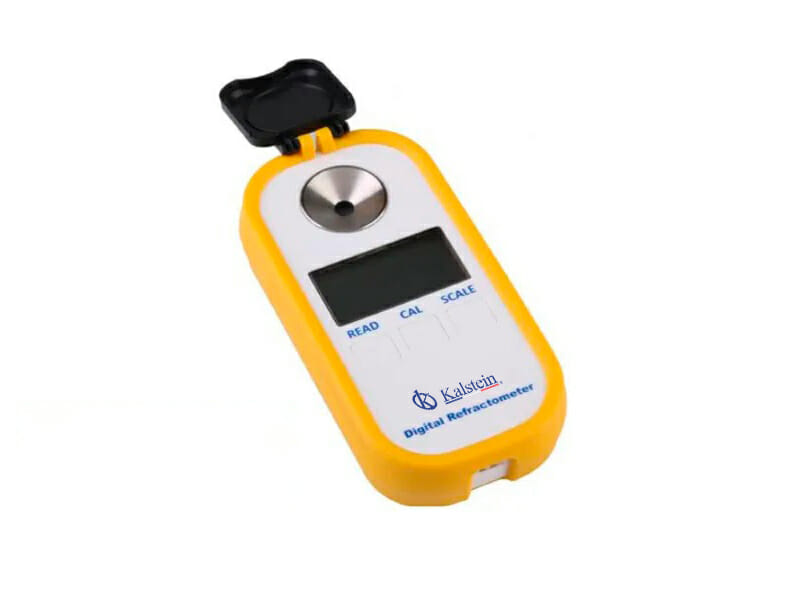
Product Description
Brix digital refractometers are cutting-edge devices designed to measure the sugar content in liquids with the utmost precision and accuracy. These instruments have become essential tools in various industries, including food and beverage, pharmaceuticals, and scientific research. The Brix digital refractometer line offers models such as YR05944, YR05945, YR05946, among others, each equipped with unique capabilities to cater to different measurement needs.
The YR05944 model, for instance, measures the Brix scale from 0.0 to 50.0% and offers a refractive index range from 1.3330 to 1.4200 nD. With a minimum division of 0.10% and an accuracy of ±0.2%, these devices offer reliable results. Automatic Temperature Compensation (ATC) ensures accuracy between 0 and 40°C, making them ideal for testing in varying environments.
Meanwhile, the YR05945 model covers a broader Brix range from 0.0 to 90.0%, focusing solely on the Brix scale. This versatility makes it a preferred choice for industries with diverse testing requirements. The Brix digital refractometers are crafted with portability and ease of use in mind, making them suitable for both laboratory and field use.
| Model | Description | Measurement Range | Min. Div. | Accuracy | ATC | ATC Temp. |
| YR05944 | Brix | Brix: 0.0-50.0% Refractive Index: 1.3330-1.4200nD | 0.10% 0.0001nD | ±0.2% ±0.0003nD | Yes | 0-40°C |
| YR05945 | Brix | Brix: 0.0-90.0% | 0.10% | ±0.2% | Yes | 0-40°C |
| YR05946 | Brix – Refractive Index | 1.3330-1.5177nD | 0.0001nD | ±0.0003nD | Yes | 0-40°C |
| YR05947 | Dextran | Dextran: 0.0–10.6% | 0.10% | ±0.2% | Yes | 0-40°C |
| YR05948 | Fructose | Fructose: 0.0–68.9% | 0.10% | ±0.2% | Yes | 0-40°C |
| YR05949 | Glucose | Glucose: 0.0–59.9% | 0.10% | ±0.2% | Yes | 0-40°C |
| YR05950 | Lactose | Lactose: 0.0–16.5% | 0.10% | ±0.2% | Yes | 0-40°C |
| YR05951 | Maltose | Maltose: 0.0–15.60% | 0.10% | ±0.2% | Yes | 0-40°C |
| YR05952 | Refractive Index | 1.3330-1.4200nD | 0.0001nD | ±0.0003nD | Yes | 0-40°C |
Market Price
When it comes to Brix digital refractometers, the market offers a varied price range to cater to different budgetary needs. The average price for these instruments typically falls between $500 and $800. This range reflects the high precision and advanced technology incorporated into their design, making them a worthy investment for professionals in diverse fields.
Potential buyers can explore various models within this price bracket, ensuring that there is an option for every specific requirement. It is essential, however, to consider the functionality and features relative to the price when deciding which model will best suit your application.
Frequently Asked Questions
What is the primary use of a Brix digital refractometer?
Brix digital refractometers are used to measure the sugar content in liquids, making them invaluable in industries like food and beverage processing, as well as in research settings for quality control and testing.
How do Automatic Temperature Compensation (ATC) features enhance the performance of the refractometer?
ATC automatically adjusts readings to account for temperature variations, providing more accurate results in different environmental conditions.
Can the refractometer be used in both laboratory and field applications?
Yes, Brix digital refractometers are designed for portable use and are suitable for both laboratory and field applications, ensuring versatility and convenience.
Advantages and Disadvantages
Advantages:
- High Precision: Brix digital refractometers offer exceptional precision in measuring the sugar content and refractive index of liquids.
- Versatility: Available in various models, catering to different measurement requirements in diverse industries.
- ATC Feature: Ensures accurate readings irrespective of temperature variations, enhancing reliability.
Disadvantages:
- Initial Investment: The advanced features and precision come at a higher cost compared to non-digital refractometers.
- Specific Calibration: Regular calibration may be necessary to ensure continued accuracy and performance.
Use of Product in the Field
The Brix digital refractometer’s practical application in the field underlines its value across various industries. Whether in vineyards assessing grape ripeness, in laboratories ensuring the consistency of products, or in research institutions testing new solutions, these refractometers prove indispensable.
In the food and beverage industry, they are extensively employed for maintaining quality control and ensuring product consistency. Operators on the production line rely on these devices to validate processes and fine-tune formulations for desired sweetness and content metrics.
Recommendations
To maximize the lifespan and effectiveness of your Brix digital refractometer, follow a few key recommendations. Firstly, regular calibration using distilled water should become part of your routine to maintain accuracy. Periodically inspect the instrument for any potential damage or wear, especially if frequently used in the field.
Ensure that the refractometer’s lens and surface are kept clean, as residues can affect readings. Store the device in a secure and stable environment to prevent unnecessary strain or damage. Through careful handling and maintenance, you can ensure that the Brix digital refractometer continues to deliver precise and reliable results over time.
If you’re seeking a fusion of innovation and quality, you’ve come to the right place. At Kalstein, we offer you the luxury of exploring our exclusive catalog of laboratory equipment. We manufacture each piece of equipment with a level of excellence. Our intuitive, efficient online purchasing channels are designed for your convenience, ensuring the friendliest prices. Do not hesitate any longer. We breathe life into science—it’s time to become a part of our community. https://kalstein.net/en/product/brix-digital-refractometer-yr05944-yr05952/
