
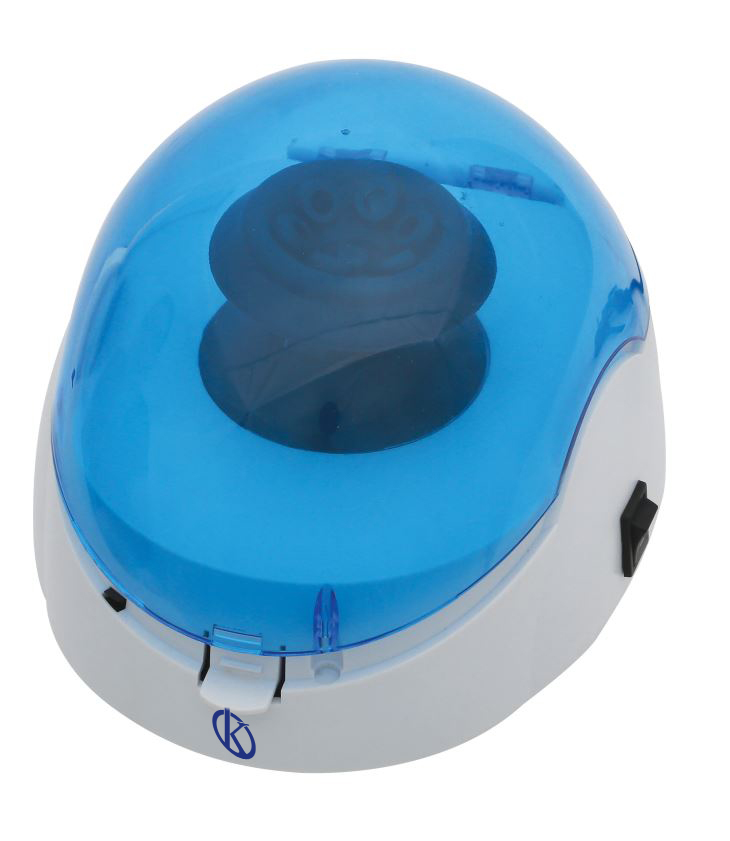
In the realm of laboratory equipment, mini centrifuges are indispensable tools for researchers and technicians alike, providing efficient sample separation within a compact form. Today, we delve into the intricacies of two prominent models: the Mini Centrifuge YR143 by Kalstein and the Mini Centrifuge 5510 by Eppendorf. Both products offer unique features tailored to meet the diverse needs of laboratories, yet subtle differences set them apart in performance and usability.
The Mini Centrifuge YR143 from Kalstein is designed with innovation and practicality in mind. It offers robust performance with a sleek, user-friendly design that allows for seamless integration into any laboratory setting. On the other hand, the Mini Centrifuge 5510 by Eppendorf is revered for its reliable operation and ergonomic design, yet some users seek enhanced features and customization options that are evident in the YR143 model.
| Feature | Kalstein Mini Centrifuge YR143 | Eppendorf Mini Centrifuge 5510 |
|---|---|---|
| Max Speed | 6000 RPM | 5500 RPM |
| Capacity | 8 x 1.5/2.0 ml tubes | 8 x 1.5/2.0 ml tubes |
| Display | Digital | Analog |
| Automatic Lid Lock | Yes | No |
| Noise Level | Low | Medium |
| Price | Competitive | Variable |
How They Work
The Mini Centrifuge YR143 by Kalstein utilizes a high-speed motor and a digital control panel to precisely manage speed and time. This centrifuge is designed to minimize noise and vibration, offering a stable environment for sensitive sample processing. The automatic lid lock function enhances safety during operation.
Meanwhile, the Eppendorf 5510 model operates with a simple analog interface, which can be intuitive for users familiar with traditional controls. It features a reliable motor that ensures consistent operation, although it lacks the automatic functions seen in more advanced models like the YR143.
Purpose
Mini centrifuges are essential for laboratories that focus on molecular biology, biochemistry, and clinical testing. Both the YR143 and 5510 models support various applications, such as separating cellular components and preparing samples for further analysis. Their compact design fits comfortably in tight laboratory spaces, making them ideal for facilities with limited workspace.
Types
Centrifuges come in different types, including refrigerated, non-refrigerated, high-speed, and ultra-speed. The YR143 and 5510 models fall into the mini centrifuge category, specifically designed for quick spin downs of small samples. They are perfect for applications where space-saving is crucial without compromising performance.
Market Price
The cost of mini centrifuges varies based on features, brand, and capabilities. Kalstein’s Mini Centrifuge YR143 offers competitive pricing without sacrificing quality, making it a popular choice among laboratories looking for value and performance. Eppendorf’s 5510 model generally falls into a moderate price range, though prices can vary significantly depending on the supplier.
Frequently Asked Questions
What is the maximum speed of the YR143?
The YR143 has a maximum speed of 6000 RPM, allowing for quick and efficient sample separation.
What is the noise level during operation?
The Kalstein YR143 is designed to operate at a low noise level, ensuring minimal disruption in the laboratory environment.
How many tubes can these centrifuges accommodate?
Both models can accommodate 8 x 1.5/2.0 ml tubes, making them suitable for small-scale experiments and sample processing.
Advantages and Disadvantages
The Kalstein Mini Centrifuge YR143 excels in several areas, including its higher maximum speed, digital display, and low noise level. Its automatic lid lock adds an extra layer of safety during use. While the Eppendorf 5510 is also a reliable model, its analog display and absence of automatic features may not appeal to all users. Additionally, the YR143 offers a smaller footprint and lower operational noise.
Field Use
In practical terms, the Mini Centrifuge YR143 is often favored in molecular biology and clinical labs due to its precision and reliability. Its digital controls allow for easy adjustments and remote troubleshooting, which saves time and reduces user error. The Eppendorf 5510, with its analog operation, may suit environments where users prefer traditional interfaces, but the ease of integration of the YR143 can be advantageous in dynamic lab settings.
Recommendations
To maximize the lifespan of your centrifuge, it is crucial to regularly clean the rotor chamber and ensure the device is balanced before use. For the Kalstein YR143, utilizing the digital controls can greatly increase the efficiency and accuracy of your experiments. Consider creating automatic maintenance reminders through Kalstein Plus to ensure optimal performance at all times.
If you are looking for a fusion of innovation and quality, you have come to the right place. At Kalstein, we offer you the luxury of exploring our exclusive catalog of laboratory equipment. We manufacture each piece of equipment with a high level of excellence. Our intuitive and agile online purchasing channels are designed for your convenience, ensuring the most user-friendly prices. Don’t hesitate any longer; we bring science to life, and it’s time to be a part of our community. https://kalstein.net/en/product/mini-centrifuge-yr143/.
