
Product Description
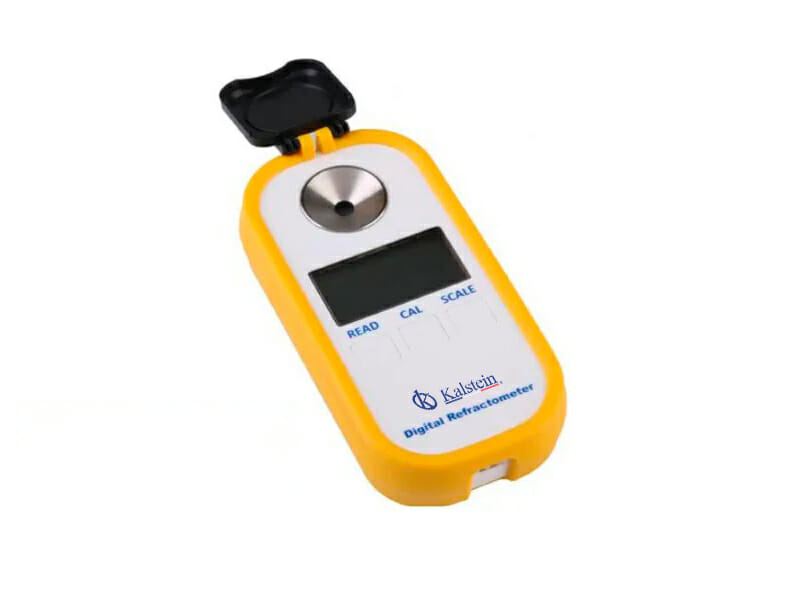
Kalstein’s range of digital refractometers, including the YR05961 and YR05965 models, are designed to provide exceptional precision and accuracy in Brix and salinity measurements. These devices bring solid dependability to laboratory environments, whether you are measuring the sweetness of fruit juices or the salinity of seawater. Each model features Automatic Temperature Compensation (ATC) which adjusts readings to account for temperature variations from 0-40°C, ensuring consistent results.
The YR05961 focuses on Brix measurements ranging from 0-50%, highly favored in the food industry among manufacturers who need to ascertain sugar content in liquid substances. The YR05962 and YR05963 models are particularly useful in assessing salinity, with a range of 0-280‰, which is vital in marine biology and aquarium management. The YR05964 model measures Specific Gravity from 1.000 to 1.217, useful for a variety of applications including battery maintenance. Additionally, the YR05965 is distinguished by its refractive index capability from 1.3330 to 1.4200 nD, providing unparalleled versatility for complex laboratory needs.
| Model | Description | Measurement Range | Min. Div. | Accuracy | ATC | ATC Temp. |
| YR05961 | Brix | 0-50% | 0.10% | ±0.2% | Yes | 0-40°C |
| YR05962 | salinity | 0–280‰ | 0.10% | ±0.2% | Yes | 0-40°C |
| YR05963 | salinity | 0–280‰ | 1‰ | ±2‰ | Yes | 0-40°C |
| YR05964 | Specific Gravity | 1.000-1.217 | 0.001 | ±0.002 | Yes | 0-40°C |
| YR05965 | Refractive Index | 1.3330–1.4200nD | 0.0001nD | ±0.0003nD | Yes | 0-40°C |
Market Price
In the competitive world of laboratory equipment, digital refractometers are priced reflecting their advanced features and high precision capabilities. The average price range for these innovative devices falls between 200 to 650 USD. This pricing ensures that laboratories and industries can access top-tier technology without breaking their budgets, gaining reliability in every measurement they conduct.
Frequently Asked Questions
How do I calibrate the digital refractometer?
Calibration is straightforward for these devices. Use distilled water or a calibration solution at room temperature. Pour it onto the prism, close the cover, and press the calibration button. Follow the specific calibration instructions detailed in the user manual for best results.
Are these refractometers suitable for field use?
Yes, their compact design, along with robust construction and ATC feature, makes them ideal for both laboratory and field use, providing consistent, accurate readings regardless of environmental conditions.
What maintenance is required for optimal performance?
To maintain accuracy and lifespan, regular cleaning of the prism with a soft cloth and avoiding harsh chemicals is recommended. Proper storage in stable, moderate temperatures also extends the life of the refractometer.
Advantages and Disadvantages
Advantages: The digital refractometers offer superior precision and rely on simple, user-friendly operation. With ATC, they deliver accurate results regardless of temperature fluctuations. Their versatility caters to a wide range of industries, from food and beverage testing to marine applications.
Disadvantages: While generally very resilient, they can be susceptible to damage if not handled carefully, particularly the optical components. Regular maintenance is essential to prevent build-up which may interfere with accuracy.
Product Use in the Field
In the practical realm, digital refractometers shine in diverse tasks ranging from brewing and winemaking, where Brix levels are pivotal, to marine biology, where understanding salinity is key. They help ensure quality control in agricultural products, supporting decisions on harvest timing for maximizing sweetness in fruits. In marine research labs or aquaculture, these devices accurately measure salinity for habitat simulation, proving indispensable across various critical scientific endeavors.
With a Kalstein refractometer, industries can transform measurement procedures, vastly improving efficiency and precision in situations that require detailed analysis and calibration.
Recommendations
Users are encouraged to follow manufacturer guidelines closely, especially regarding maintenance routines which preserve the refractometer’s precision. Employing the devices in the recommended temperature range (0-40°C) will also maximize lifespan and accuracy. It’s beneficial for users to familiarize themselves with the device’s software, unlocking all features for optimized performance.
If you are seeking a fusion of innovation and quality, you have come to the right place. At Kalstein, we offer you the luxury of exploring our exclusive catalog of laboratory equipment. We manufacture each unit with a level of excellence. Our intuitive and agile online purchasing channels are designed for your convenience, ensuring the most friendly prices. Don’t hesitate any longer, we bring science to life, it’s time to become part of our community. https://kalstein.net/en/product/digital-brixsalinity-refractometers-yr05961-yr05965/.
