
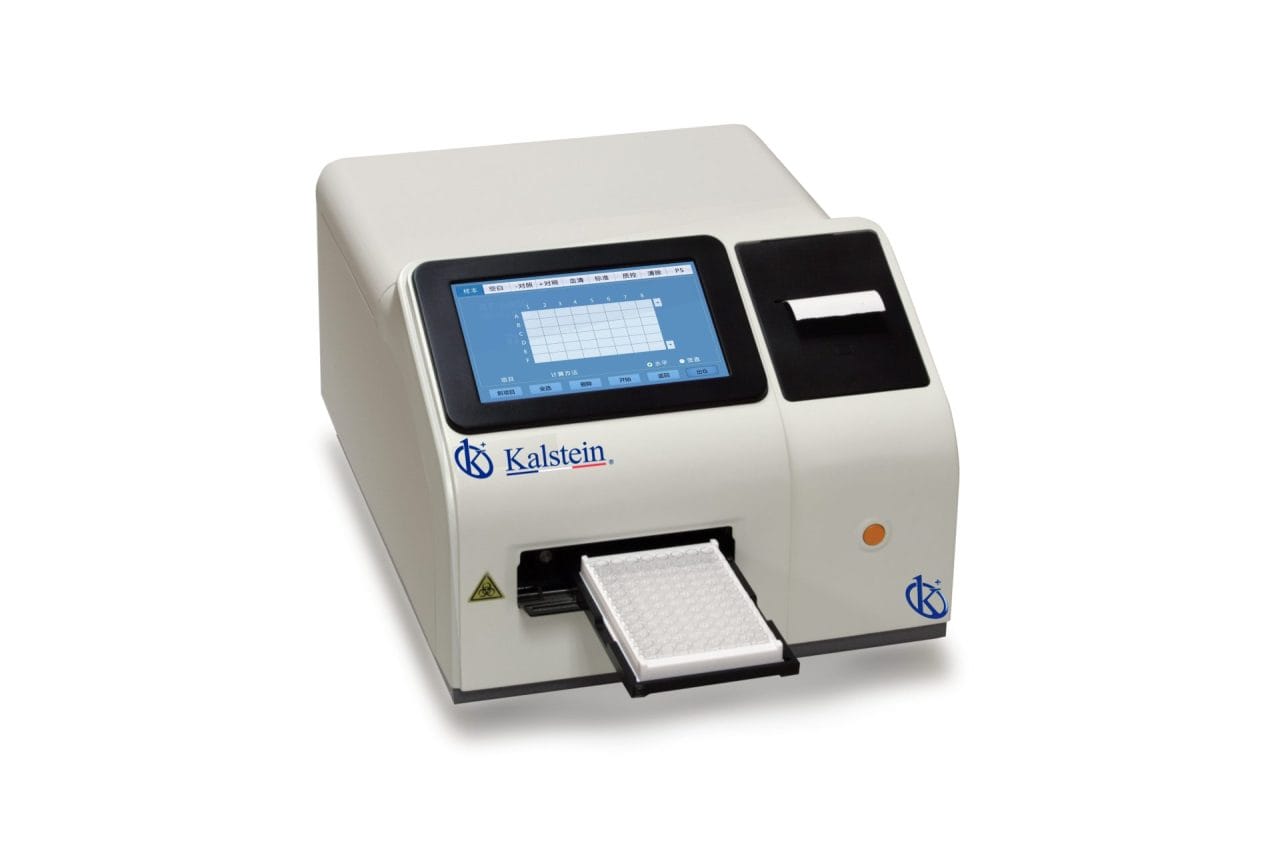
Microplate Reader, Kalstein Brand
The Kalstein Microplate Reader stands out in the laboratory equipment market, not only for its precision and reliability but also for its user-friendly interface that caters to laboratory professionals and researchers alike. Having personally experimented with this reader, it’s evident that it offers a seamless integration of advanced optical technology with a design that emphasizes ease of use. This device ensures that every assay is conducted with accuracy, making it a valuable tool in high-throughput lab environments.
What truly distinguishes the Kalstein Microplate Reader is its ability to deliver consistent results across a range of applications, from ELISA to various fluorescence-based assays. As someone who has spent considerable time in the lab, I can attest to the importance of a reader that minimizes errors and maximizes efficiency. This device does exactly that, allowing for rapid data collection and analysis without compromising on quality.
Features of the Microplate Reader
One of the defining features of the Kalstein Microplate Reader is its advanced optical system that provides high sensitivity and precise measurement capabilities. The system is designed to accommodate a variety of assay types, ensuring that it can meet the diverse needs of any laboratory setup. This versatility is crucial for laboratories that handle a wide range of experiments, enabling a streamlined workflow and reducing the need for multiple devices.
In addition to its optical prowess, the reader is equipped with user-friendly software that offers extensive data analysis options. This software simplifies the process of interpreting results, providing clear and detailed data outputs that facilitate decision-making. This synergy between hardware and software optimizes efficiency and accuracy, making it an essential tool for both novice and experienced users.
Different Types or Models of the Microplate Reader
Kalstein offers a range of Microplate Reader models to suit varying laboratory needs. Each model is tailored to specific applications, ensuring that whether you’re conducting immunological assays or kinetic studies, there is a compatible option. The diverse range of models varies primarily in detection modes and throughput capacity, offering flexibility depending on your specific project requirements.
The availability of different models doesn’t just cater to different types of tests but also budgets. This range ensures that whether a lab is equipped for high-end research or is a cost-conscious teaching institution, there is a suitable Kalstein Microplate Reader. The choice of models empowers the user to select the best fit without having to compromise on crucial features such as sensitivity and reliability.
Why does the Microplate Reader have this price?
The pricing of the Kalstein Microplate Reader is a reflection of its high-quality components, advanced technology, and the extensive research and development invested into its production. The price point considers the need for precise and reliable laboratory instrumentation that can perform consistently over time. When investing in lab equipment, the cost often correlates with the longevity and breadth of features offered, a balance that Kalstein manages to strike excellently.
Unlike some lower-priced alternatives, the Kalstein Microplate Reader is built to last, incorporating robust materials and top-notch technology that justify the price. Its pricing is competitive when compared to industry standards, given the high performance and the reduced maintenance costs over its lifespan. This cost efficiency makes it a preferred choice among institutions looking to maximize return on investment while maintaining superior operational standards.
Compare the Microplate Reader with similar products
When considering competitors like **Thermo Fisher Scientific**, **Bio-Rad Laboratories**, and **Molecular Devices**, it’s crucial to assess factors such as technology, pricing, and user experience. **Thermo Fisher Scientific’s** Varioskan LUX Multimode Microplate Reader, for example, offers similar flexibility with its multiple detection modes. However, the simplicity of operation and the comprehensive software integration in the Kalstein models make them more accessible to users at all expertise levels.
**Bio-Rad Laboratories,** known for their Immunoassay microplate readers, provides a robust platform for specific types of assays but lacks the ease of adaptability seen in Kalstein models. On the other hand, **Molecular Devices** offers systems that focus heavily on high throughput and automation, usually at a premium cost, which may not be justifiable for labs that don’t require such extensive capabilities. Across these comparisons, Kalstein’s proposition of capacity and convenience at a reasonable price is turn-key for many labs.
Pros and Cons of the Microplate Reader
| Pros | Cons |
|---|---|
| High sensitivity and accuracy | Initial cost may be higher than some alternatives |
| User-friendly interface | Requires regular calibration for optimal performance |
| Versatile range of models | Limited to specific assays without additional configuration |
| Advanced data analysis software | Software updates may require additional training |
| Durable construction | Heavier than some compact models |
| Easy integration with lab workflows | Peripheral compatibility issues with older equipment |
| Cost-effective in the long term | |
| Wide range of applications |
Usage benefits of these Microplate Readers
The Kalstein Microplate Reader provides exceptional benefits for those in research and clinical environments. One of the primary advantages is the optimization of laboratory time, allowing researchers to execute their protocols with less downtime. This efficiency transformation is crucial in environments where time-sensitive assays need quick and reliable results.
Moreover, the ease of data management and analysis through its software is particularly beneficial, minimizing the errors that often come with manual data processing. This software integration supports a broader range of experimental setups, enabling researchers to customize and automate processes, reducing variability and enhancing reproducibility.
Other advantages of the Microplate Reader
An often-overlooked aspect of the Kalstein Microplate Reader is its energy efficiency. This reader is designed to minimize energy consumption without compromising performance, a feature that aligns with sustainability goals in many modern laboratories. Reduced energy use not only benefits the environment but also significantly cuts down on operational costs over time.
Furthermore, the reader’s compatibility with various labware types, including different microplate formats, is another distinctive advantage. This flexibility permits users to adapt to varying experimental conditions, significantly enhancing the reader’s utility and extending its lifecycle within different experimental contexts.
User testimonials about the Microplate Reader
Feedback from users of the Kalstein Microplate Reader is overwhelmingly positive. One lab technician noted, “The ease with which it integrates into our existing system has cut down our analysis time significantly.” Another researcher remarked, “The precision and reliability of the Kalstein Microplate Reader have elevated our lab’s throughput and accuracy, benefiting ongoing research projects immensely.”
Additionally, the support offered by the company post-purchase has been praised, with users highlighting the responsiveness and expertise of the technical team. This customer service experience is pivotal, especially in high-stakes environments where timely troubleshooting can make a critical difference.
Frequently Asked Questions
What types of assays can be conducted with the Kalstein Microplate Reader?
The reader is versatile and can handle a wide span of assays such as ELISA, kinetic studies, fluorescence, and more, accommodating various research needs.
How does the Kalstein Microplate Reader ensure accuracy in data collection?
It employs a sophisticated optical system and advanced software to provide high sensitivity and precise data outputs, ensuring reliable results every time.
What kind of maintenance does the Microplate Reader require?
Regular calibration and cleaning are recommended to maintain optimal performance, but the overall maintenance is straightforward and manageable with routine checks.
Is the software user-friendly for those inexperienced with microplate readers?
Absolutely, the intuitive interface and comprehensive support documentation make the software easily navigable for both novices and experienced users.
How does the Kalstein Microplate Reader compare cost-wise to its competitors?
While the initial cost might be on par or slightly higher than some competitors, its durability and low maintenance needs make it a cost-effective option over time.
Can the reader be integrated into existing lab equipment setups?
Yes, its design enables easy integration, ensuring compatibility and seamless operation within your current laboratory infrastructure.
Final recommendations about these Microplate Readers
In conclusion, the Kalstein Microplate Reader offers a comprehensive solution for laboratories seeking precision, reliability, and efficiency. Compared to similar products from companies like **Thermo Fisher Scientific** and **Bio-Rad Laboratories**, it provides a balanced combination of cost-effectiveness and high performance. These readers are an investment in both time and cost savings, and their versatility makes them an invaluable asset in any laboratory setting. For more information, check out the details on their website: https://kalstein.net/en/category-product/laboratory-line/microplate-reader/.
