
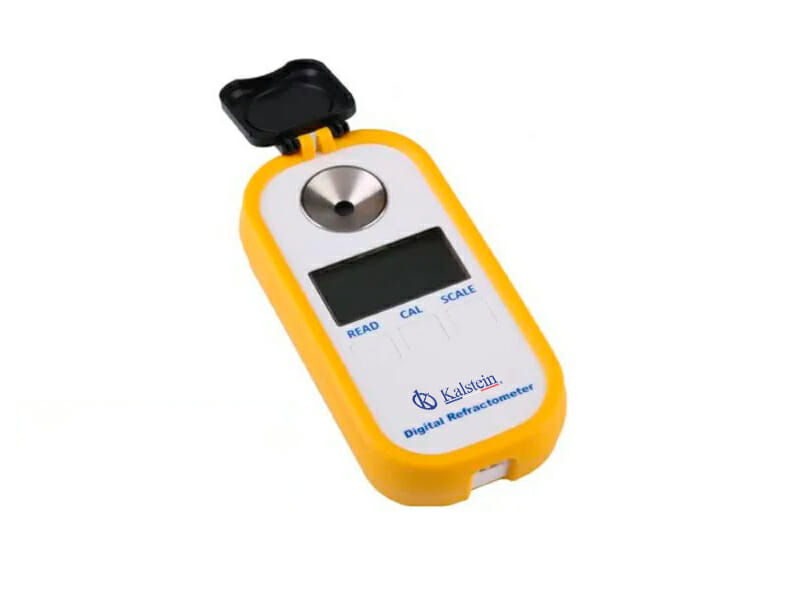
Product Description
The Salinity Digital Refractometer series, specifically models YR05953 to YR05960, embodies the latest in precision measurement technology. With their ability to measure salinity, specific gravity, and refractive index across a variety of ranges, these refractometers cater to a wide range of scientific applications. Designed with Automatic Temperature Compensation (ATC) from 0 to 40°C, they ensure accurate readings even in fluctuating temperature conditions, making them indispensable tools in laboratory environments.
These refractometers offer a high degree of accuracy, with specific models such as the YR05953 providing a measurement range of 0.0–28.0% salinity and an accuracy of ±0.1%. The refractometers are easy to use and feature digital displays that allow for quick readings, making them a practical choice for fieldwork and laboratory analysis. Whether you’re assessing seawater salinity, the specific gravity of liquid samples, or the refractive index, these instruments deliver reliable and consistent results.
| Model | Description | Measurement Range | Min. Div. | Accuracy | ATC | ATC Temp. |
| YR05953 | Salinity | 0.0–28.0% | 0.10% | ±0.1% | Yes | 0-40°C |
| YR05954 | Salinity | 0–280‰ | 1‰ | ±1‰ | Yes | 0-40°C |
| YR05955 | Specific gravity | 1.000-1.217 | 0.001 | ±0.002 | Yes | 0-40°C |
| YR05956 | Refractive Index | 1.3330–1.3900nD | 0.0001nD | ±0.0003nD | Yes | 0-40°C |
| YR05957 | Salinity | 0—100‰ | 1‰ | ±2‰ | Yes | 0-40°C |
| YR05958 | Chlorinity | 0–57‰ | 1‰ | ±2‰ | Yes | 0-40°C |
| YR05959 | Specific gravity | 1.000-1.070 | 0.001 | ±0.002 | Yes | 0-40°C |
| YR05960 | Refractive Index | 1.3330–1.3530nD | 0.0001nD | ±0.0003nD | Yes | 0-40°C |
Market Price
Digital refractometers, renowned for their precision and versatility, are generally priced in the market between $200 and $500. The specific cost within this range typically depends on the model’s capability and the brand’s reputation. Kalstein’s Salinity Digital Refractometer range offers competitive pricing, often leaning on the lower end of the spectrum without compromising on quality or features.
Considering the durability and advanced functionality of these refractometers, investing in them is economically advantageous for laboratories and research facilities. To explore the complete pricing details, customers can request a quote or utilize the Kalstein Plus platform for an automatic quote generation.
Frequently Asked Questions
How does the Automatic Temperature Compensation work?
The Automatic Temperature Compensation (ATC) feature ensures that readings are accurate by adjusting for the effect of temperature on samples, providing reliable data across a range of 0-40°C.
What maintenance does the refractometer require?
Routine cleaning and calibration are recommended to maintain accuracy. Cleaning should be done with a soft cloth and distilled water after each use. Regular calibration with a standard fluid ensures optimal performance.
What is the measurement principle of a digital refractometer?
Digital refractometers measure the refractive index, which changes with the concentration of solutes in a liquid. This principle allows for the determination of parameters like salinity and specific gravity.
Advantages and Disadvantages
Advantages:
- High accuracy and repeatability in measurements.
- User-friendly digital interface for easy reading and data recording.
- Compact and portable, suitable for both lab and field use.
- Wide variety of measurement ranges to accommodate different applications.
Disadvantages:
- Requires regular calibration and maintenance to ensure accuracy.
- Initial cost might be higher compared to analog devices, although long-term savings are substantial.
Product Use in the Field
In real-world applications, the Salinity Digital Refractometer is invaluable in marine biology for measuring seawater salinity, ensuring the proper conditions for aquatic life. Its use extends to aquariums, desalination plants, and even in agriculture for monitoring soil salinity levels.
In the food and beverage industry, these refractometers help maintain product quality by measuring the concentration of sugar in solutions, essential for the production of syrups, juices, and other beverages. The device’s versatility and precision make it a vital tool across multiple industries.
Recommendations
For optimal performance, it is advised to calibrate the refractometer regularly using standard solutions. Store the device in a clean, dry place to prevent any damage to sensitive components. When using the refractometer, ensure that the sample is free from bubbles or particulates, as these can affect the accuracy of measurements.
Moreover, using the Kalstein Plus platform can facilitate acquiring additional accessories that enhance the functionality and longevity of your refractometer, ensuring it remains an integral part of your analytical toolkit.
If you are looking for a fusion of innovation and quality, you have come to the right place. At Kalstein, we offer you the luxury of exploring our exclusive laboratory equipment catalog. We manufacture each piece of equipment with a high level of excellence. Our intuitive and agile online purchasing channels are designed for your convenience, ensuring the friendliest prices. Do not hesitate any longer, we bring science to life, it is time to be part of our community. https://kalstein.net/en/product/salinity-digital-refractometer-yr05953-yr05960/.
